

Had a few tight clearance issues in our
Had a few tight clearance issues in our outdoor setup. Ryan walked me through the exact subpanel and spacing specs over chat. Super fast response and knew his stuff inside out.
250+
reviews on
 &
&


Had a few tight clearance issues in our outdoor setup. Ryan walked me through the exact subpanel and spacing specs over chat. Super fast response and knew his stuff inside out.
No weird hidden fees or endless checkout upsells trying to get me to buy extra garbage I don't need. They had what I wanted in stock, the specs were accurate, and the order shipping email had all the tracking info as soon as it processed. Clean transaction.
We've purchased several saunas and heaters from them for our properties. Service has been top notch every time. Ryan helps us get the right equipment , keeps us updated on order processing timelines and the freight delivery is always very professional and timely. Also the best pricing we could find.
Excellent customer service and very smooth order process. They took the time to answer all our questions thoroughly. Gave us a great deal too!
Andy is very helpful and easy to work with. Really appreciate his making things stress free for us!
Andy went above and beyond making sure we got the right equipment for our commercial project. He even took the time to answer questions that were out of scope. That kind of service is rare. Would definitely recommend this company. Thanks Andy!

We were stuck trying to figure out sizing for an awkward room space, but the detailed site info + online chats made it easy to compare different setups without any guessing. Everything went through without a single hiccup or surprise along the way.
Ryan at SaunaHeaters.com really went above and beyond and was instrumental in us getting an amazing sauna+heater for our backyard. The buying experience was flawless through every step. Thanks so much.
We needed to replace a burned out heater in our building's sauna which gets heavy usage by residents all day long. I was worried about getting the wrong size and phase/voltage but the guys at saunaheaters.com walked me through everything we needed. The ordering process was totally seamless and professional. Will definitely use them for our other buildings.
excellent purchase experience at saunaheaters.com. knowledgeable chat support rep and best pricing online!
Excellent purchase experience. Product was packaged very nicely and arrived on time. Everything went smoothly from start to finish. Highly recommended!
Super easy ordering and heater arrived early. Thank you
 SaunaLife Cube CL5G Luxury 4 Person Outdoor Sauna
The Saunalife CL5G is stunning in person. The thermo-aspen interior smells great and the full glass front gives our backyard view a real luxury spa feel. Holds heat exceptionally well once brought up to temp.
 Harvia KIP80B 8kW 240V Electric Sauna Heater With Built-In Controls Package
Didn't want to deal with complex wifi controls or extra wiring so the built in timer and temp dials on this model were perfect. The 8 hour delay feature works awesome for setting it before heading out on a run so its ready when I get back. Electrician had zero issues hooking up the 240v line.
 HUUM HIVE 15kW 240V Electric Sauna Heater Package
the huum hive 15kw is an absolute unit. holds over 500 pounds of rocks so the thermal mass is insane. it takes about an hour to heat up our 600 cu ft space but once it gets going the steam is unbelievable. looks like a massive stone sculpture in the middle of the room.
 Finnmark FD-4 Trinity Infrared & Steam Sauna Combo
we couldn't decide between a traditional steam setup or an infrared unit, so the finnmark fd4 trinity was the perfect compromise. honestly it's the best of both worlds - you get the deep sweat from the IR panels and you can still dump water on the harvia rocks for tha traditional steam. plus the medical grade red light panel is an awesome bonus. the fact that the entire cabin runs on regular 120v wall outlets without hiring an electrician is pretty amazing.
 HUUM STEEL 10.5kW 240V Electric Sauna Heater Package
we chose the huum steel heater because our sauna layout is a bit tight and this thing has very small safety clearances. It barely takes up any floor space but completely blasts the room with heat. Was able to get the room to the right temps in 35-40 mins. Steam quality is awesome.
SaunaLife Cube CL5G Luxury 4 Person Outdoor Sauna
We are so happy we went with the Saunalife cl5g 4 person model. The wood quality is top tier and the tolerances during assembly were tight. The full glass front gives great view of our redesigned backyard. It feels like a high end luxury spa!
 Harvia Club K15G - 15kW 240V/208V Electric Sauna Heater Package
Bought the harvia club heater to replace the old unit in our main sauna. Since this sauna is running constantly throughout the day we needed something serious. This heater definitely gets the job done - heats up the room incredibly fast and maintains the temperature perfectly even with people opening and closing the door all day long. If you have a high use setup this is a great one to get.
Infrared saunas heat the body directly using infrared light rather than heating the surrounding air, creating a deep sweat experience at lower and more comfortable temperatures than traditional steam saunas. Available in indoor, outdoor, and hybrid models, they come in a variety of sizes and styles for different spaces, lifestyles, and wellness goals, while offering benefits related to relaxation, recovery, circulation, and overall home wellness.


An infrared sauna uses infrared light panels to heat the body directly, rather than heating the surrounding air like a traditional sauna. Infrared saunas are available in many styles, including indoor cabins, outdoor barrels, and hybrid infrared + steam combination units. They come in sizes from 1 person to 6 people and operate at lower air temperatures than traditional saunas while still producing a deep, therapeutic sweat. Most smaller models plug into a standard 120V home outlet with no electrician required. SaunaHeaters.com carries indoor and outdoor infrared saunas with manufacturer warranty, expert sizing guidance, and authorized dealer support.
If you are weighing infrared saunas against traditional steam saunas (electric or wood-fired), this page is designed to explain everything about the infrared sauna experience. We’ll size each type of sauna up and look at how they compare and where each one excels.
If you already know you want infrared, we have a sizing guide so that you can find the right capacity for your space and household. And if you are not sure whether indoor or outdoor saunas fit your situation better, we’ll walk through the details in our installation guide. This page is designed to be an all-in-one guide to infrared saunas; start wherever makes the most sense for where you are in the decision.
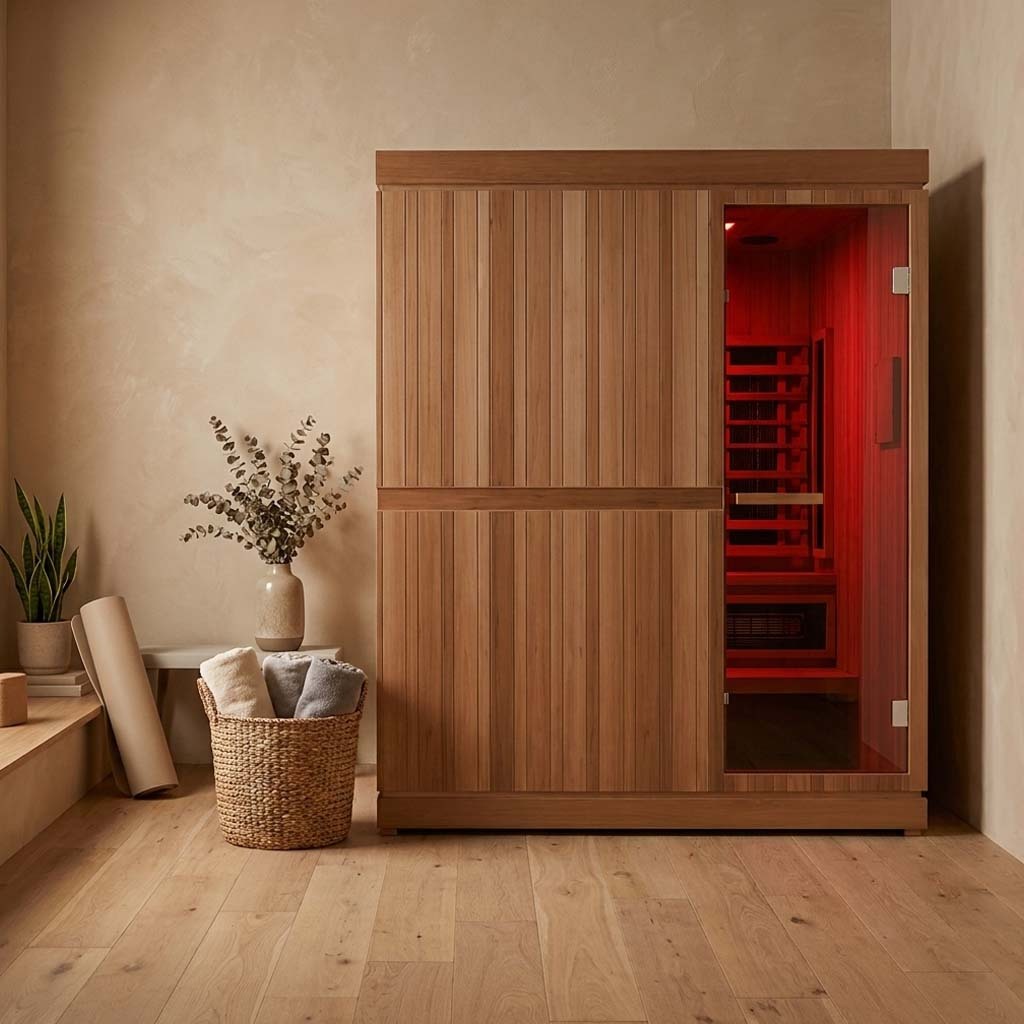
Infrared is a form of light you can feel but cannot see because it exists just beyond the red end of the visible spectrum. When infrared panels are directed at the body, that energy is absorbed as warmth, similar to how sunlight warms your skin on a cold day. The key difference is that the surrounding air remains comparatively mild, since the heat is directed into the body rather than into the room itself.
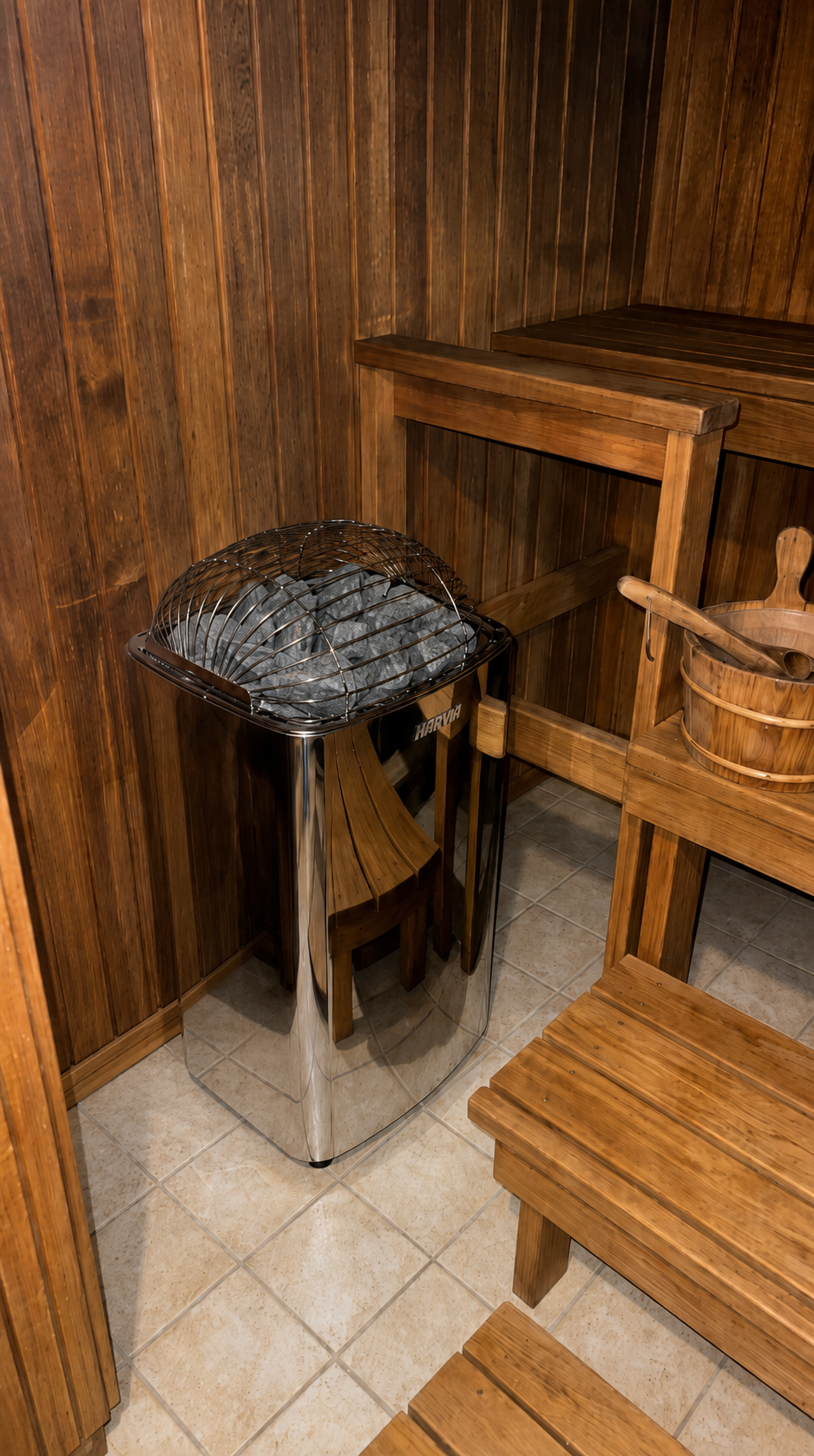
Traditional saunas work in the opposite way. Instead of heating the body directly, they heat the surrounding air to very high temperatures, which then transfers heat to the body.
Traditional sauna
Infrared Saunas
Infrared saunas skip the steam process entirely and operate at lower ambient temperatures.
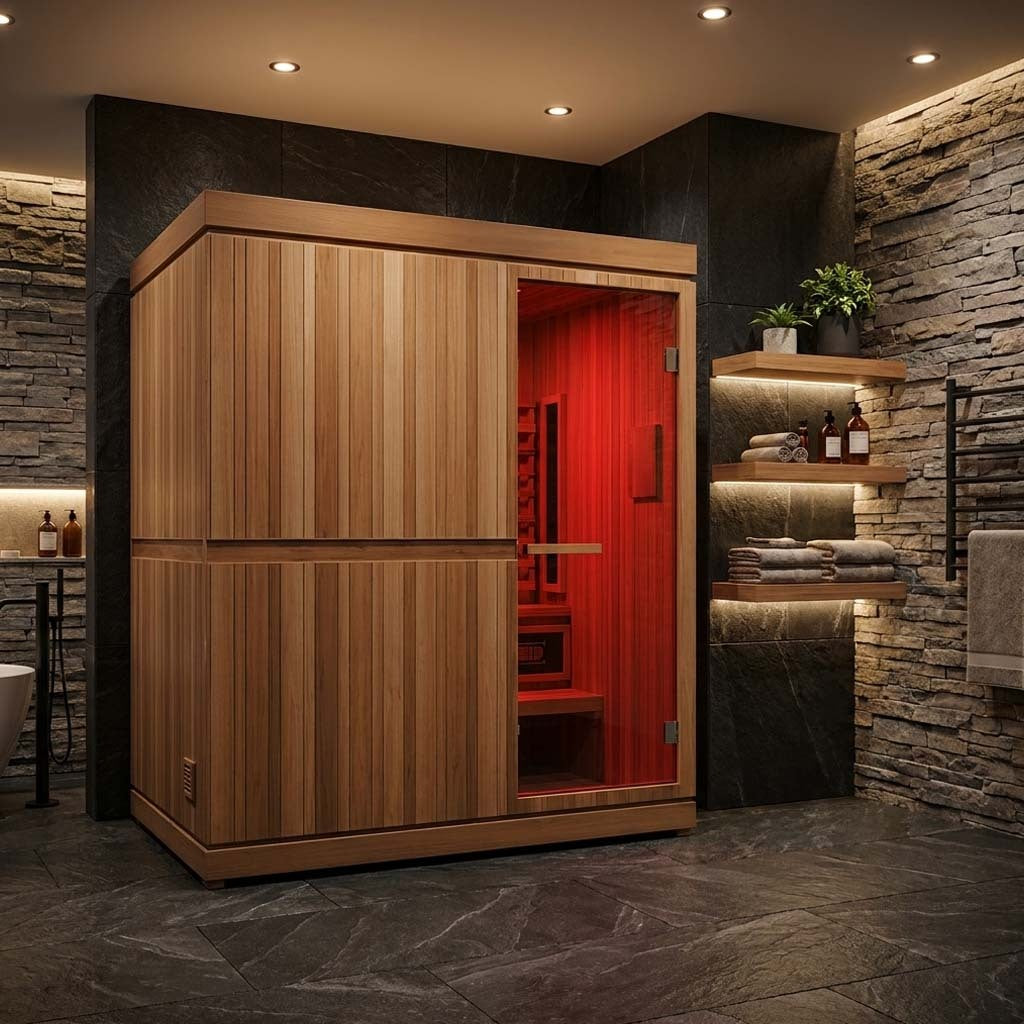
Both sauna styles are effective at creating a strong sweat response, but they achieve it through entirely different heating methods. There are also hybrid sauna models that combine infrared panels with a traditional stone heater in the same unit, allowing users to switch between experiences depending on the session.
Infrared heaters use different wavelengths to get different results, and the differences are far more than merely cosmetic. Near-infrared targets the skin surface and is associated with skin health benefits. Mid-infrared reaches into joints and soft tissue, while far-infrared penetrates deepest into muscle mass.
Some saunas use only far-infrared; others combine all three wavelengths for broader coverage across different tissue depths.
On the heater side, carbon panel heaters are the most common and tend to produce a lower, even heat output across a large surface area. Ceramic and Incoloy® (an alloy of nickel, iron, and chromium) heaters produce more intense, more concentrated heat and reach higher temperatures. Many high-quality saunas combine both types to get wide surface coverage alongside high heat output.
The first decision in any sauna installation process is, fundamentally, where the sauna goes. Everything else follows from that.
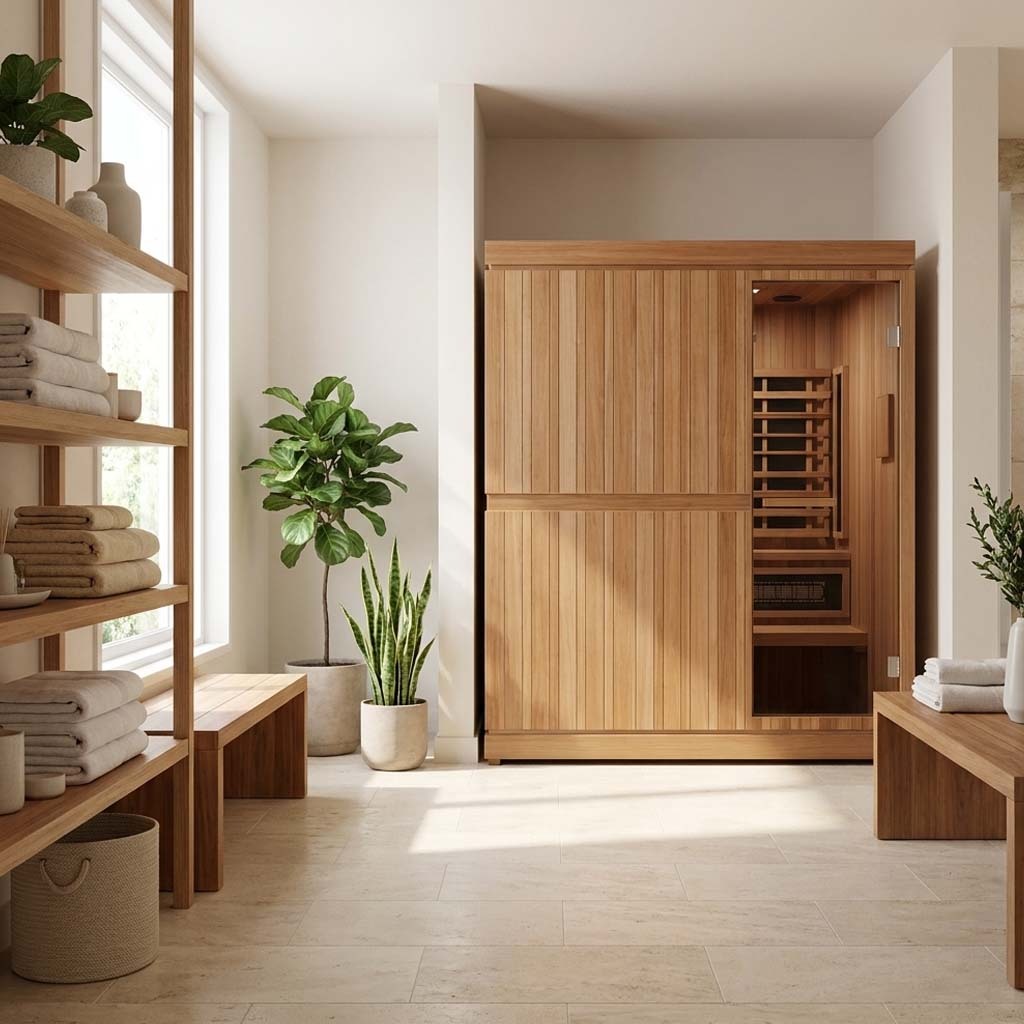
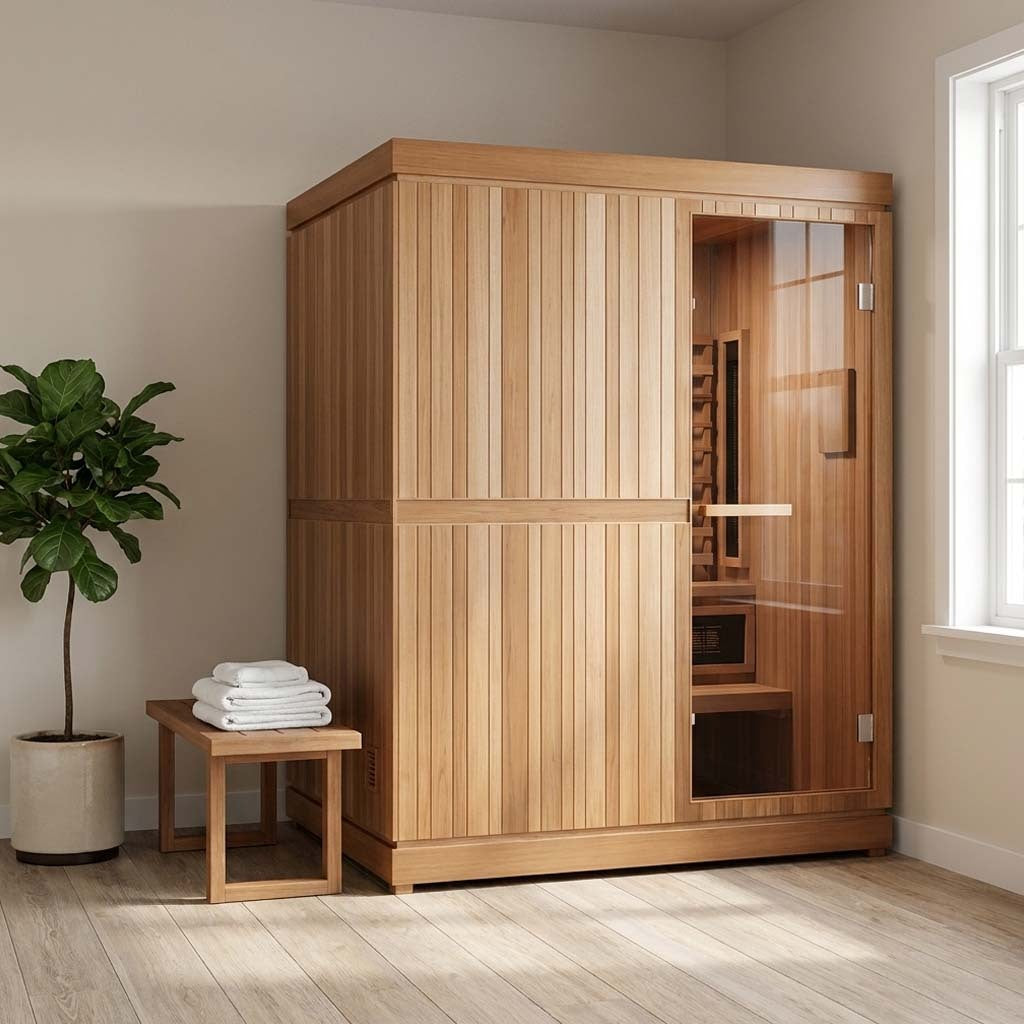
Indoor infrared saunas are freestanding cabins that assemble on any flat, stable surface, e.g., hardwood, carpet, tile, or concrete. Smaller models (1-2 person) plug directly into a standard 120V outlet, meaning no electrician and no permit in most jurisdictions. No special ventilation is required, either. Indoor saunas are the most popular home infrared format because the barrier to setup is low and the year-round access is easy.
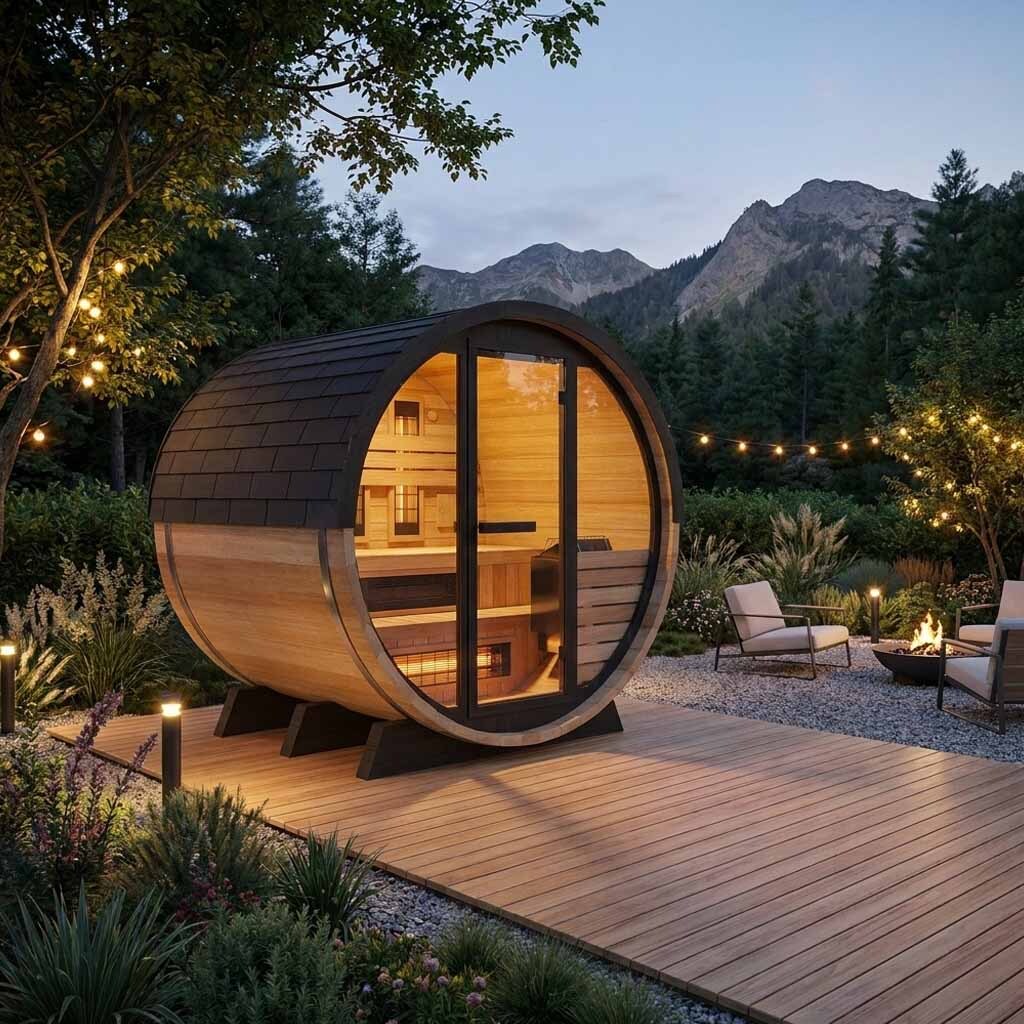
Outdoor infrared saunas are built to live outside in all seasons. Most use a barrel configuration, with thick wood staves, sealed tempered glass, stainless steel hardware, and weatherproof roofing designed for temperature extremes in both directions. They require a level foundation (a concrete pad or compacted gravel base works well) and a dedicated 240V circuit. The payoff is that they free up interior space entirely and tend to make a strong visual impression in a backyard or pool area.
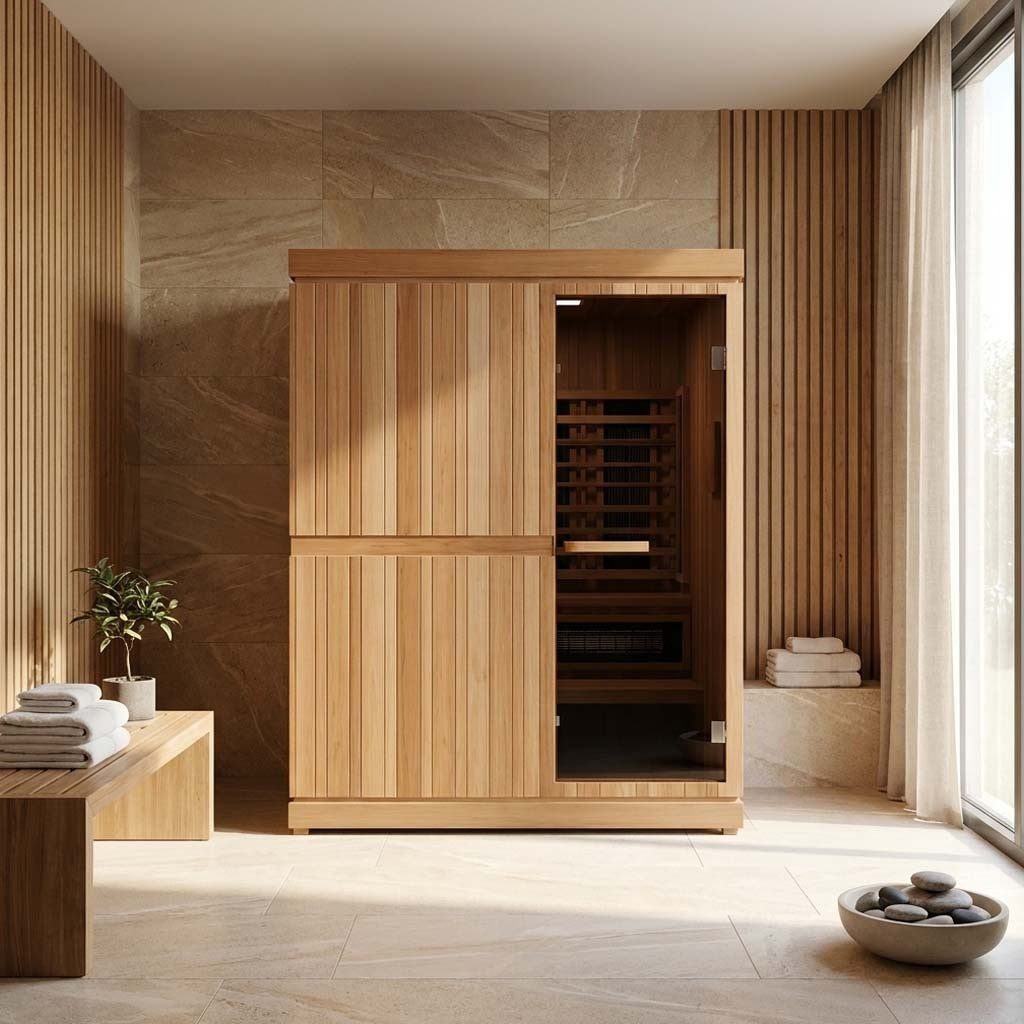
Hybrid infrared and steam saunas house both heating systems in one structure. You can run infrared only, use the heater and pour water on the stones for a session with traditional löyly, or run both at once. Hybrid models are available in indoor and outdoor configurations, and can be the right choice for buyers who do not want to commit to one experience, or who share the sauna with a partner who has different preferences. That said, the extra options and complexity often come with the tradeoff of a higher price point.
Quick Comparison
Infrared sauna use has been studied across a range of health and wellness applications. Regular users commonly report experiencing some or all of the outcomes below:
The benefits described above are based on existing research and user experience. These statements have not been evaluated by the FDA. Infrared saunas are not medical devices and are not intended to diagnose, treat, cure, or prevent any disease. Consult your physician before beginning sauna therapy, especially if you have cardiovascular conditions, are pregnant, or take medications that affect heat sensitivity.
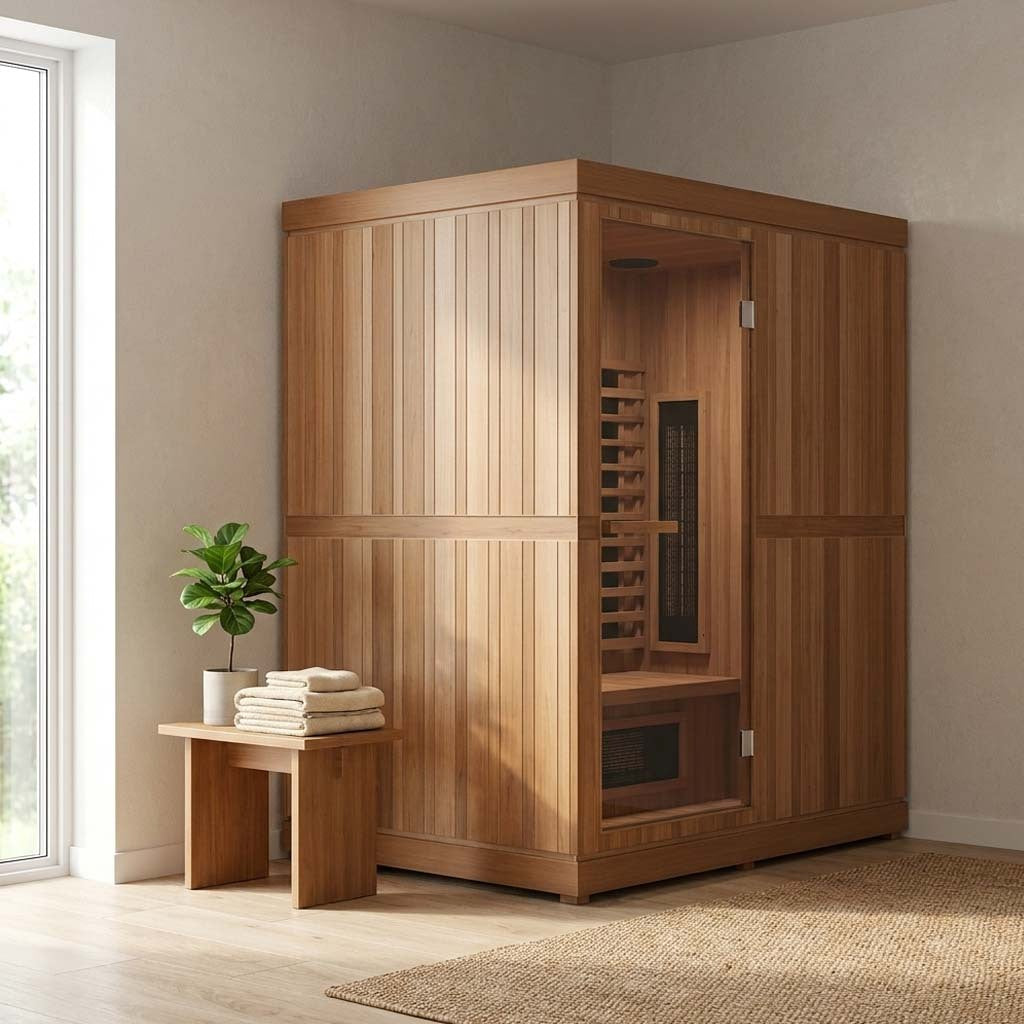
Next to determining where your sauna will go, the second biggest question is: Who (and how many) will use it? Sauna size determines footprint, electrical requirement, and price.
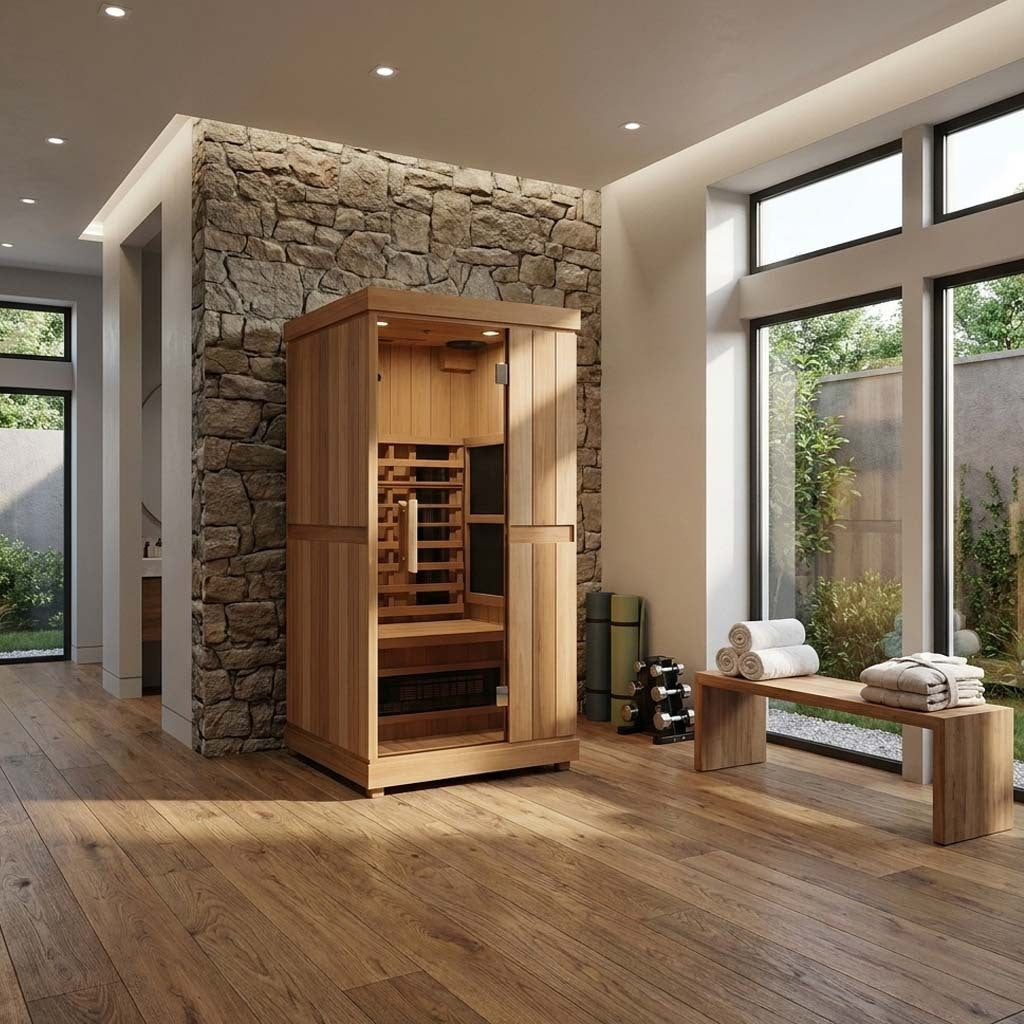
Not sure which size fits your space? Contact Us for a sizing consultation, or use the 📐 Size Calculator to get a quick answer.
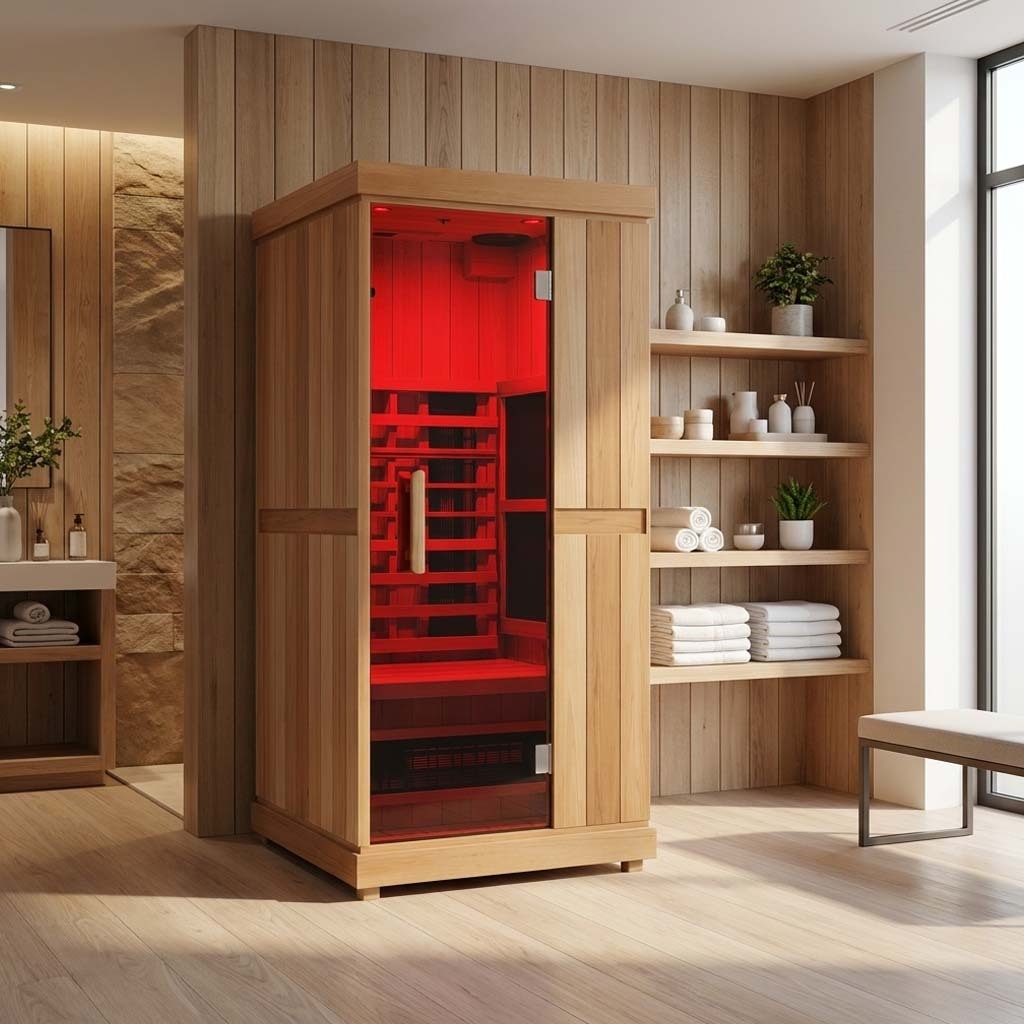
The infrared sauna price range is wide, and the gap between a low-end unit and a premium unit is not arbitrary. Here is what actually separates a quality infrared sauna from a cheap one.
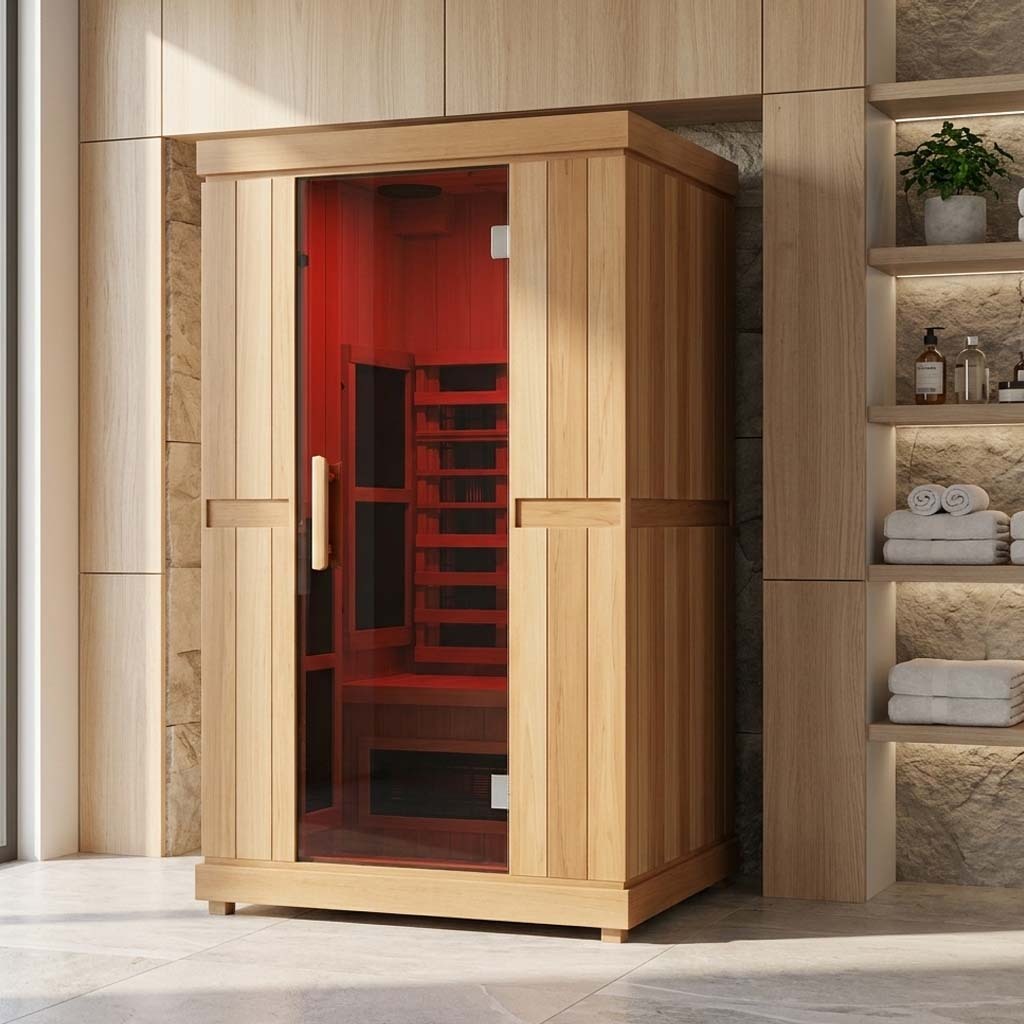
Watch out for: no UL or ETL listing, no published third-party EMF data, single-wall construction, and any warranty shorter than five years.
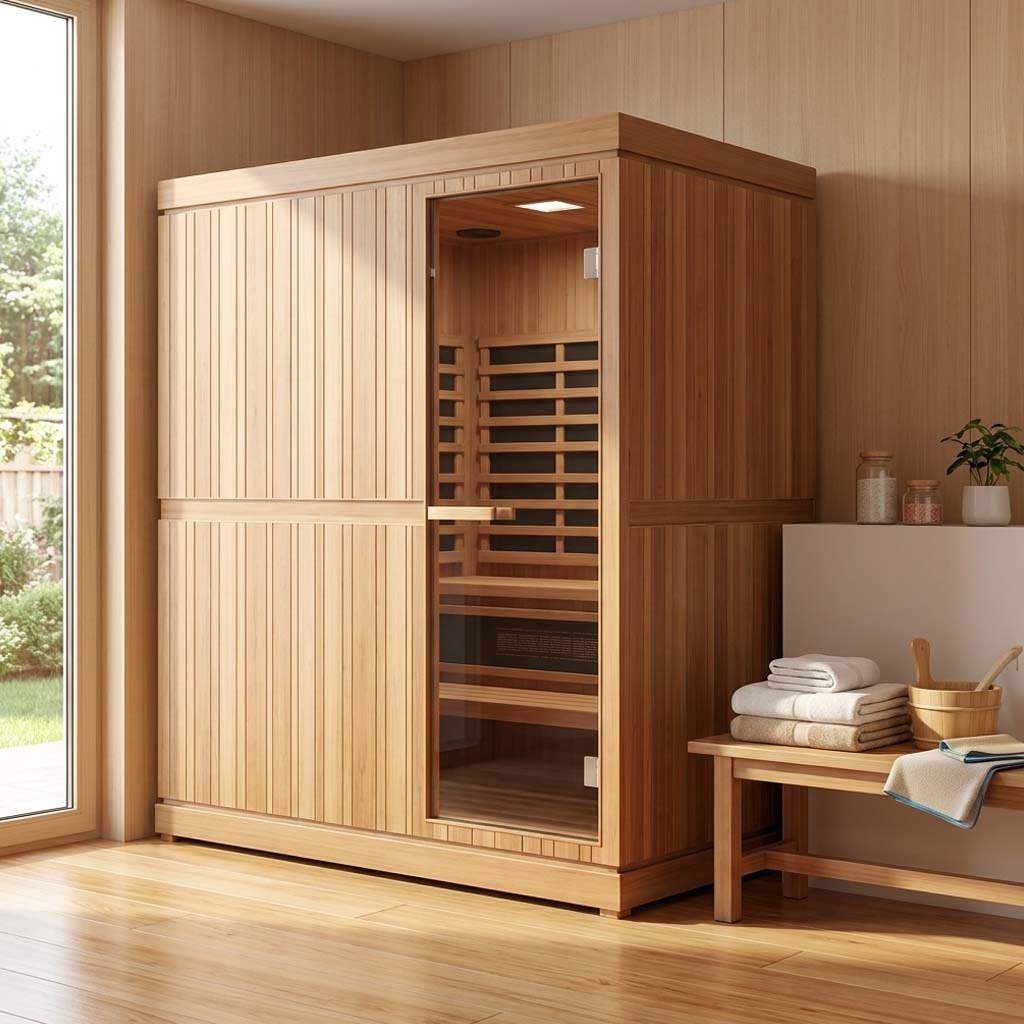
Infrared saunas are among the lowest-maintenance wellness investments you can make. There is no water system, no stones to replace, and no humidity-driven mold risk. Most of what you need to do takes about five minutes after each session.
How to Clean an Infrared Sauna
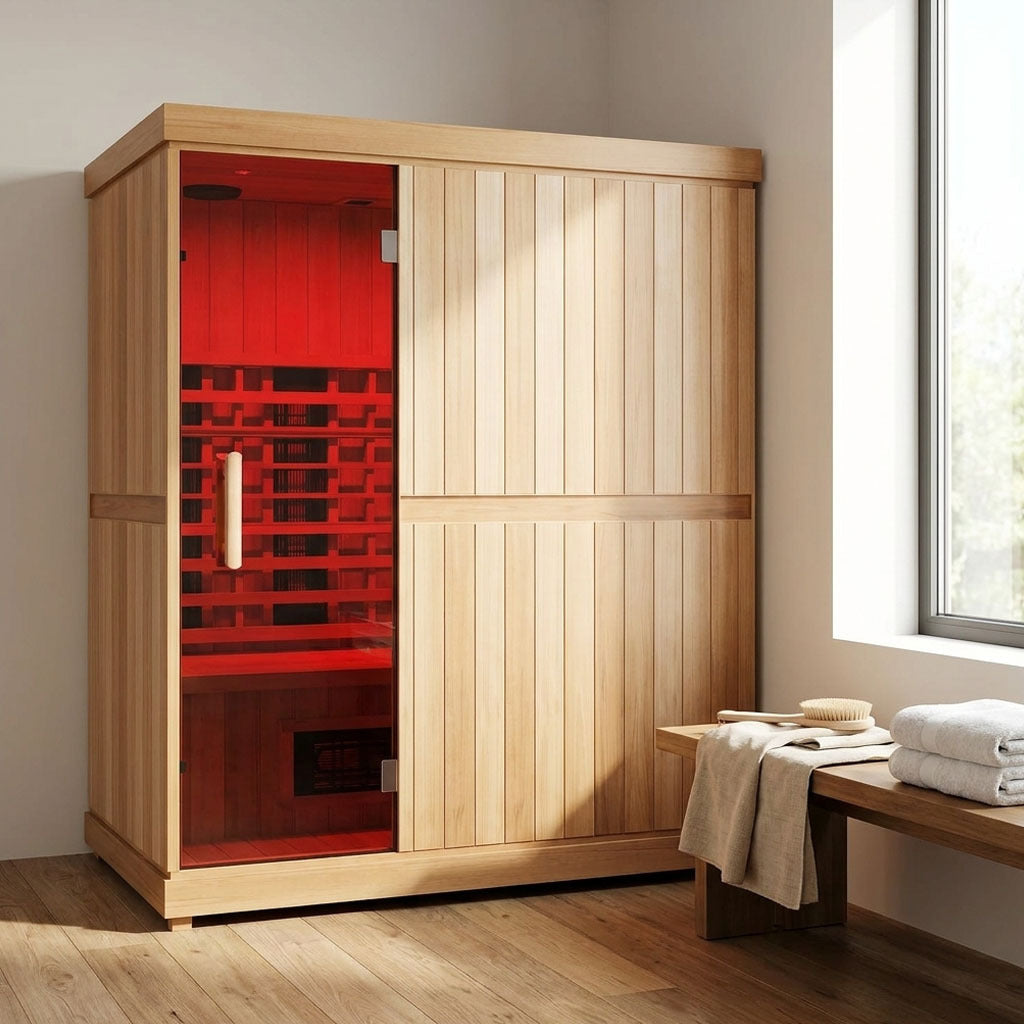
How to Care for Infrared Sauna Wood
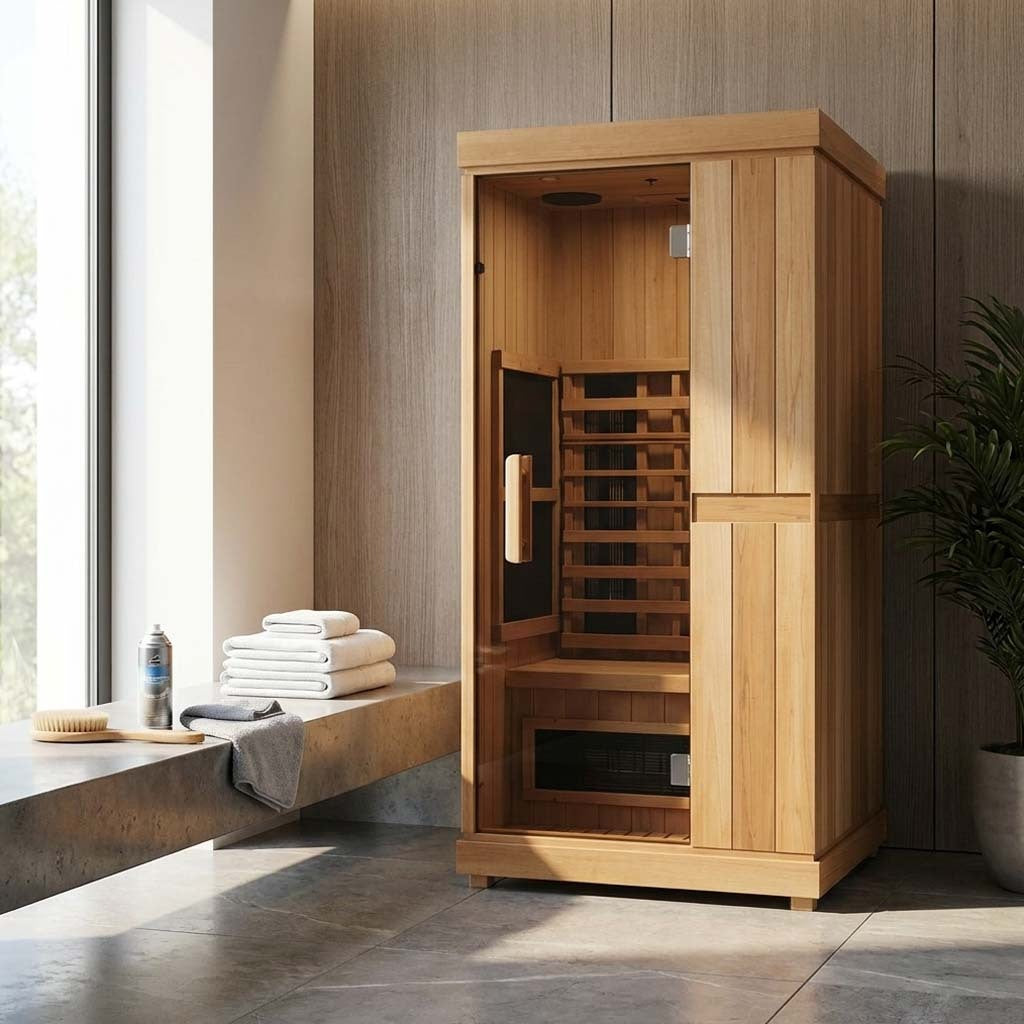
Infrared Sauna Heater Maintenance
Infrared Sauna Lifespan and Longevity
For towels, brushes, and cleaning supplies, browse the Sauna Accessories collection
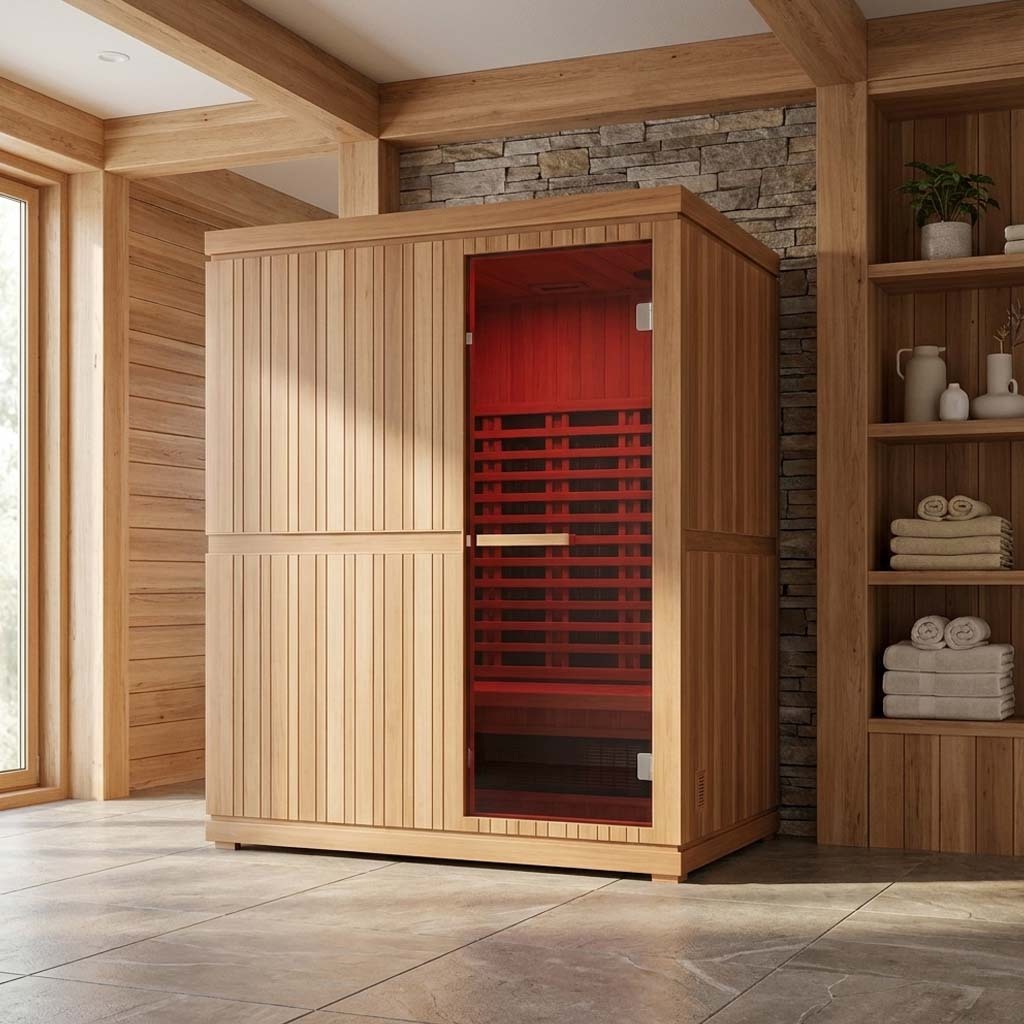

Infrared saunas are used for a wide range of wellness applications. The most commonly reported and studied benefits include:
Individual results vary. Infrared saunas are not medical devices and are not intended to diagnose, treat, or cure any condition.
The core difference is how heat is delivered. A traditional sauna heats the surrounding air, typically to 170°F or above, and your body absorbs that heat from the hot air around you. Pouring water on heated stones adds steam (löyly) and produces the sharp, enveloping sensation that defines the Finnish sauna experience.
An infrared sauna skips the hot air entirely. Infrared panels emit light that your body absorbs directly as warmth, at cabin air temperatures that typically stay between 120 and 150°F. Both approaches produce a deep sweat. Infrared tends to be more tolerable for longer sessions; traditional saunas offer the steam ritual that infrared cannot replicate. Hybrid models house both systems in one unit for buyers who want both.
Infrared saunas run cooler, typically topping out around 150°F, while traditional saunas tend to start around 170°F and, at the top end, can exceed boiling point. Despite the lower air temperature, the sweat response is comparable, because infrared heat works on the body directly rather than through the surrounding air. Most people find infrared sessions easier to breathe through and easier to sustain for 30 to 45 minutes.
It depends on the size. Most 1-person and 2-person infrared saunas plug into a standard 120V household outlet, with no electrician, no dedicated circuit, no permit required in most cases. Larger models (3-person and up) and virtually all outdoor infrared saunas require a dedicated 240V circuit, which does require a licensed electrician to install. Always check the voltage and amperage specs for any model before purchasing, particularly if you are planning to use an existing outlet.
Yes, provided you choose a sauna built specifically for exterior use. Outdoor infrared saunas are constructed with weather-resistant materials, like thick wood staves, sealed tempered glass, stainless steel hardware, and weatherproof roofing, that are designed for year-round exposure. They also require a level foundation and a dedicated 240V electrical circuit.
A standard indoor infrared sauna cabin is not rated for outdoor use and should not be placed outside, even under a covered patio.
Start by considering how many people will use it regularly, then factor in your available space and electrical setup:
If space is the primary constraint, a 1- or 2-person infrared sauna can fit in most bedrooms, basements, or large spare rooms without any structural changes.
Budget far-infrared-only models can be as cheap as $1,500. However, at that price point, you are typically looking at lower-grade heaters, single-wall construction, and thinner glass. Quality infrared saunas, with premium wood, double-wall insulated panels, certified heaters, and published EMF testing, start at $4,000 and can get to $10,000, depending on size and configuration. The construction gap between those two price bands is real and affects both performance and longevity.
Yes, and it is one of the more well-supported applications for infrared heat. Increased blood flow to fatigued muscles delivers more oxygen to damaged tissue and helps clear metabolic byproducts like lactic acid. Research suggests regular post-exercise sessions may reduce soreness and shorten recovery time. It is not a replacement for sleep and nutrition, but it is a legitimate tool.
Larger models (5- to 6-person) are used in spas, yoga studios, physical therapy offices, and short-term rentals. For commercial use, prioritize:
Most residential saunas are designed for one to three sessions per day. High-traffic settings may require units rated beyond that threshold.
For virtually all healthy adults, yes. Infrared saunas run at lower ambient temperatures than traditional saunas, which most people tolerate easily. However, you should consult a physician before use if you are pregnant, have cardiovascular conditions, take medications that affect heat sensitivity or sweating, or have any condition that impairs thermoregulation. In general: hydrate well, start with 15 to 20 minute sessions, and avoid alcohol before or during use.