


I had a bunch of questions before ordering and they were very patient with me. Ended up getting exactly what I needed and the price was good too.


Sauna Heater Size Calculator
Not sure how much heater power your sauna needs? The sauna heater size calculator gives you a recommended kW rating based on three simple inputs. The sauna heater calculator considers the room volume, cold surfaces, insulation, location, and preferred brand, using the brand’s own sizing guidance to help determine the right heater size.
📏 Measure Your Sauna Space
Accurate dimensions ensure the perfect heater match
🎯 Why Dimensions Matter
Your sauna's volume (length × width × height) is the most critical factor in selecting the right heater. A heater that's too small won't reach proper temperature, while one that's too large wastes energy and can overheat your space.
Pro Tip: Measure the interior space of your sauna where you'll actually sit. Don't include wall thickness or equipment areas.
Total Cubic Feet Volume of the Sauna
0 cu ft
❄️ Cold Surfaces & Insulation
These factors significantly impact heating requirements
🪟 What Are Cold Surfaces?
Glass doors, windows, tile walls, brick, concrete, and stone absorb significantly more heat than wood. These materials require extra heating power to maintain proper sauna temperature.
How to Measure: Enter each glass door, window, or non-wood surface separately using the "+ Add Another Surface" button below. For a full-glass front, enter its full width and height. Each heater brand has its own rule for how much heating power cold surfaces require (2–4 cu ft per sq ft) — we apply it automatically based on the brand you choose in the next step.
Choose wisely: Poor insulation adds 15% to your heating needs. Well-insulated walls keep heat in and reduce energy costs.
Total Square Feet of Cold Surfaces
0 sq ft
💡 Note: The floor doesn't count as a cold surface since you're sitting above it. Focus on walls, doors, and windows.
🌍 Location & Climate
Environmental factors affect heating performance
🌡️ Why Location & Climate Matter
Outdoor saunas face wind, cold air, and temperature fluctuations that require more heating power. Cold climates compound this effect, so we add a percentage of your base volume to compensate.
Location impact: Indoor saunas benefit from home heating, while outdoor saunas must combat external temperatures and weather.
Why we ask: Each manufacturer publishes its own guidance for how much extra heating power glass and other cold surfaces require. We apply your preferred brand's sizing guidance — or every brand's guidance if you have no preference.
🎯 Your Perfect Heater Match
Personalized recommendations based on your specifications
📊 Your Adjusted Sauna Volume
0 cu ft
📋 Calculation Breakdown
How we calculated this: We started with your base volume, then added each manufacturer’s own allowance for cold surfaces (HUUM 3.3, Harvia & Finlandia 3.94, Saunum 3.0, Scandia 2.0 cu ft per sq ft), plus adjustments for insulation quality and location/climate, so your heater can maintain optimal temperature (150-195°F) even in challenging conditions.
✨ Your Recommended Heaters
Perfectly matched to your sauna specifications
Still not sure? All recommended heaters will work for your space. Consider factors like: brand preference, built-in vs external controls, and aesthetic design. Need help? Contact our sauna experts for personalized guidance!
How to Use the Sauna Heater Size Calculator
The sauna heater size calculator uses three basic steps to estimate the heater power your room needs.
Step 1: Enter Your Dimensions
Measure and enter the sauna’s interior length, width, and height in feet, inches, or meters. If you already know the total cubic feet, you can enter that instead. Room volume is the main starting point for sauna heater sizing.
Step 2: Add Cold Surfaces and Insulation
Enter the size of glass, tile, brick, concrete, or stone surfaces by width and height. Then select the insulation level. Cold surfaces increase heat loss, while poor insulation means the heater needs to provide more power.
Step 3: Choose Location and Brand
Select whether the sauna is indoors or outdoors, then choose your preferred brand. The tool applies that brand's sizing guidance to the adjusted room volume and returns a heater recommendation. This is especially useful when comparing electric sauna heaters from different manufacturers, as their sizing recommendations can vary.
What Determines Sauna Heater Size?
Several factors influence sauna heater sizing, with room volume being the starting point. Your sauna heater dimensions and construction also matter because different materials can change how much heat the room loses.
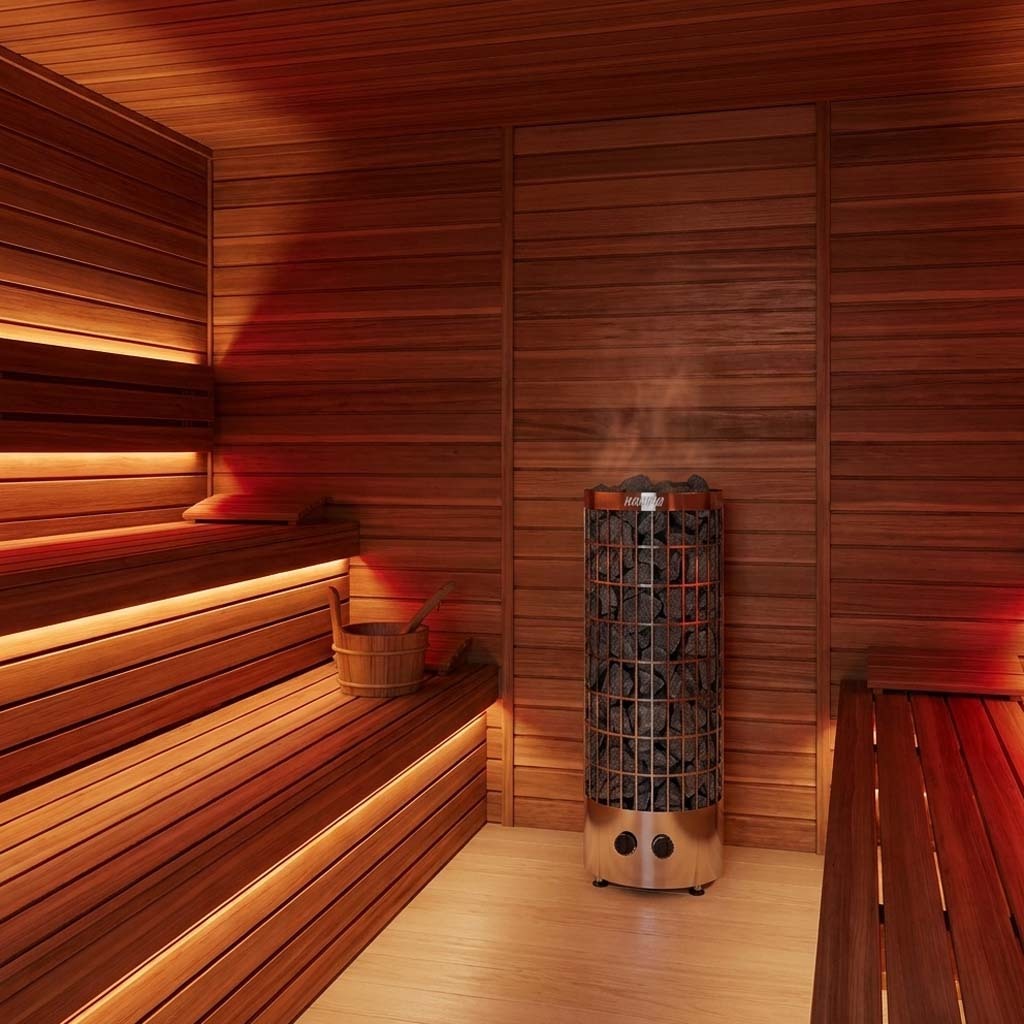
- Room volume: Multiply length × width × height to find the cubic footage the heater must warm. An approximate rule of thumb is about 1 kW per cubic meter, or roughly 35 cubic feet. Exact requirements vary by brand, so use the calculator and the manufacturer's guidance for final sizing. Harvia also uses about 1 kW per cubic meter as a general starting point.
- Cold surfaces: Glass, tile, brick, concrete, and stone can increase heat loss. The adjustment varies by brand and can range from about 2 to 4 cubic feet per square foot of cold surface.
- Insulation: Poorly insulated rooms lose heat faster and need additional heating capacity. This calculator adds 15% for poor insulation.
- Indoor or outdoor: Outdoor saunas generally face greater heat loss from wind and colder surrounding temperatures. The calculator adds 10% for an outdoor location.
- Brand and heater type: Manufacturers use different sizing methods and heater specifications. HUUM, Harvia, and Saunum all provide their own sizing guidance, so the recommended kW can vary for the same room.
“We’ve sold hundreds of sauna heaters, and one of the biggest sizing mistakes we see is choosing a heater based only on the room’s cubic footage. Large glass areas, masonry surfaces, insulation quality, and whether the sauna is indoors or outdoors can all affect how much heating capacity the room needs. That’s why we look at the entire sauna, not just its dimensions, before recommending a heater.”
Sauna Heater Size Chart
Use this sauna heater size chart only as an approximate starting point. It assumes a well-insulated indoor sauna with minimal glass. Heater requirements vary by brand, construction, and heater model, so verify the result with the calculator and manufacturer guidance before purchasing.
| Sauna Volume | Approx. Heater Power | Typical Use |
|---|---|---|
| Up to ~150 cu. ft. | ~3 to 4.5 kW | 1 to 2 persons |
| ~150 to 300 cu. ft. | ~4.5 to 6 kW | 2 to 3 persons |
| ~300 to 450 cu. ft. | ~6 to 8 kW | 3 to 4 persons |
| ~450 to 600 cu. ft. | ~8 to 9 kW | 4 to 6 persons |
| ~600 cu. ft. and up | ~9 kW and up | 6+ persons |
These ranges are illustrative rather than brand-specific specifications. For example, current Harvia models show different room-volume ranges for different heater outputs, reinforcing the need to check the specific model.
Use the calculator for your actual room. It accounts for glass, insulation, location, and brand-specific sizing instead of relying on the chart alone.
Why Correct Sauna Heater Sizing Matters
Correct sauna heater sizing helps the room reach and maintain the desired temperature without placing unnecessary demands on the heater.
An undersized heater can struggle to reach the desired temperature, heat the room unevenly, and run at maximum output for longer periods. That sustained workload can contribute to faster wear.
An oversized heater can heat the room too quickly and may make temperature control more difficult. It can also cost more to purchase and operate than necessary.
The goal is to match the heater's output to the sauna's volume and heat-loss characteristics. Using the room dimensions, cold surfaces, insulation, location, and brand in the calculator provides a more useful starting point than choosing a heater based on room capacity or bather count alone.
Find Your Sauna Heater
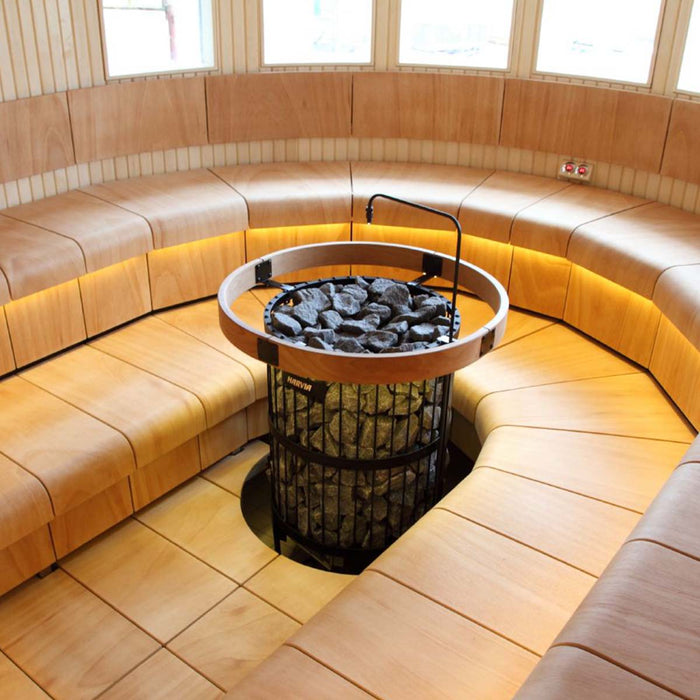
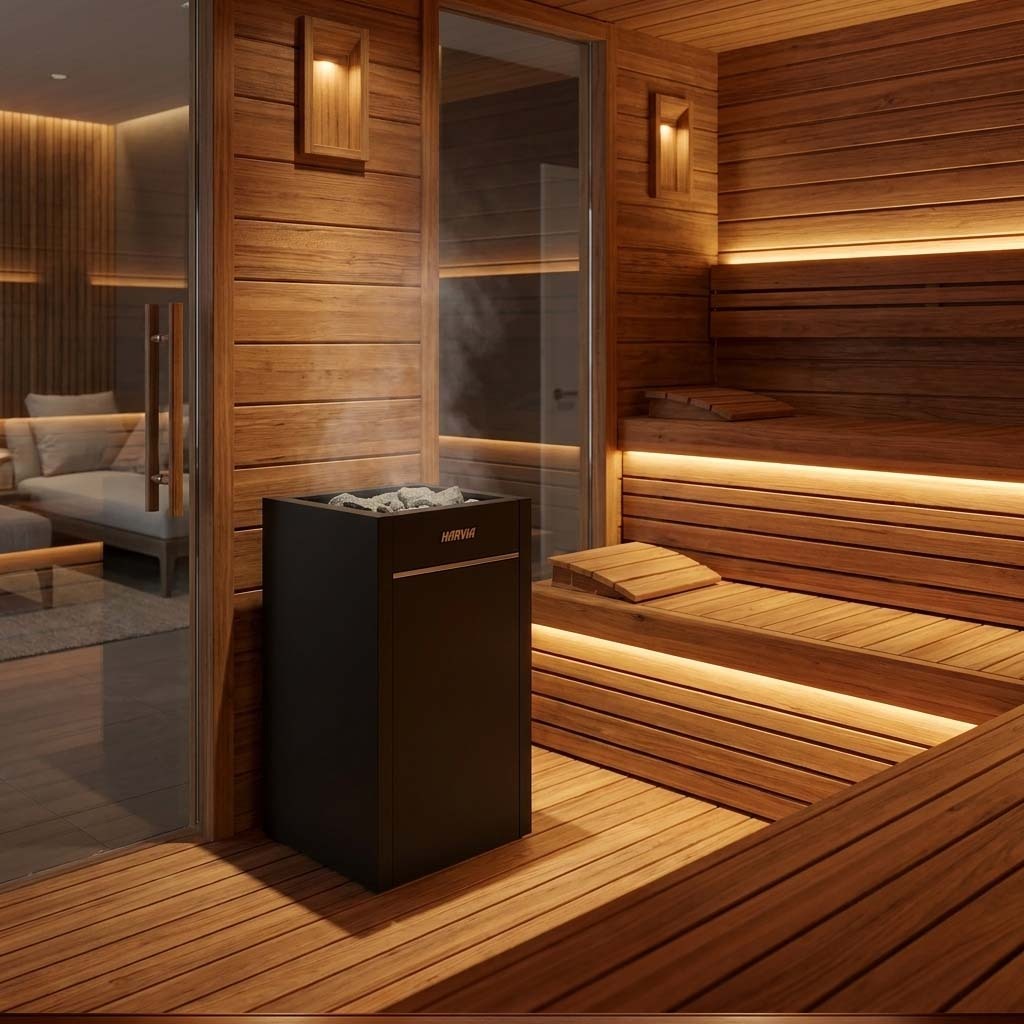
Once you have the recommended kW, shop for a matching sauna heater or contact US-based sauna experts to confirm the fit, controls, voltage, and stone requirements for your chosen model. SaunaHeaters.com has earned a high overall rating from customer reviews.
For electric sauna heaters, installation requires careful attention to the electrical specifications. A dedicated 240V circuit is commonly required for US residential electric sauna heaters, with the circuit sized to the heater's kW and installed by a licensed electrician. Always confirm the voltage, amperage, wiring, and circuit requirements for the specific model before installation.
Each brand offers different heater designs and output options, so comparing the available models can help you find the right fit for your sauna. Here’s a closer look at three well-known options: HUUM, Harvia, and Saunum.
- HUUM Sauna Heaters: HUUM offers modern electric sauna heaters with sizing options for different sauna volumes and designs. HUUM sauna heaters are available in a range of outputs, making it important to match the selected model to the adjusted room volume and cold-surface considerations.
- Harvia Sauna Heaters: Harvia offers a broad selection of electric sauna heaters across different power ratings and room sizes. When choosing a Harvia sauna heater, compare the recommended sauna volume for the specific model with the calculator's result to ensure the heater is appropriately sized.
- Saunum Sauna Heaters: Saunum sauna heaters combine heating with air circulation technology designed to help distribute heat more evenly throughout the sauna. Because Saunum uses its own sizing guidance and considerations for cold surfaces, use the calculator's brand selection to get a recommendation suited to your room.
Frequently Asked Questions
How do I calculate the sauna heater size I need?
Use a sauna heater size calculator to start with the room's cubic footage, calculated from length × width × height. Then account for cold surfaces, insulation, and indoor or outdoor location, while following the sizing guidance for the selected brand.
What size heater do I need for my sauna?
It depends on cubic footage, glass and other cold surfaces, insulation, and whether the sauna is indoors or outdoors. As an approximate guide, a 2 to 3 person indoor sauna may use about 4.5 to 6 kW, but confirm the required size with the calculator and the heater manufacturer's guidance.
How do cold surfaces affect sauna heater size?
Glass, tile, brick, concrete, and stone can increase heat loss and therefore increase the required heater capacity.
Depending on the brand, the adjustment can be about 2 to 4 cubic feet per square foot of cold surface, and the calculator applies the relevant adjustment automatically.
What happens if my sauna heater is too small?
A heater that is too small can struggle to reach the target temperature, heat the room unevenly, and run at maximum output for extended periods. Correcting the heater size or reducing heat loss through better insulation and fewer cold surfaces can help.
Is there a downside to an oversized heater?
Yes. An oversized heater can heat the sauna too quickly and make temperature control more difficult. It may also cost more to purchase and operate than a properly sized heater.
Do outdoor saunas need a bigger heater?
Usually, yes. Outdoor saunas can lose more heat because of colder temperatures and wind exposure, so the calculator adds about 10% for outdoor location. In colder climates or exposed locations, additional considerations may apply.
Do different brands size heaters differently?
Yes. Electric sauna heater sizing varies by manufacturer and model. HUUM, Harvia, and Saunum publish their own sizing guidance, including different approaches to accounting for cold surfaces, which is why the calculator asks for your preferred brand.
Do I need a special circuit for an electric sauna heater?
Most US electric sauna heaters require a dedicated 240V circuit sized for the heater's electrical requirements and installed by a licensed electrician.
Confirm the required voltage, amperage, circuit, and wiring specifications for the specific heater before installation.