

Infrared saunas heat the body directly using infrared light rather than heating the surrounding air, creating a deep sweat experience at lower and more comfortable temperatures than traditional steam saunas. Available in indoor, outdoor, and hybrid models, they come in a variety of sizes and styles for different spaces, lifestyles, and wellness goals, while offering benefits related to relaxation, recovery, circulation, and overall home wellness.

Finnmark FD-1 Full-Spectrum Infrared Sauna
Choose your option

Finnmark FD-2 Full-Spectrum Infrared Sauna
Choose your option

Finnmark FD-3 Full Spectrum Infrared Sauna
Choose your option

Finnmark FD-4 Trinity Infrared & Steam Sauna Combo
Choose your option

Finnmark FD-5 Trinity XL Infrared & Steam Sauna Combo
Choose your option

Finnmark FD-7 Infrared & Steam Barrel Sauna
Choose your option

Finnmark FD-6 Infrared & Steam Barrel Sauna
Choose your option
Infrared Saunas for Home: Indoor, Outdoor, and Hybrid Models
An infrared sauna uses infrared light panels to heat the body directly, rather than heating the surrounding air like a traditional sauna. Infrared saunas are available in many styles, including indoor cabins, outdoor barrels, and hybrid infrared + steam combination units. They come in sizes from 1 person to 6 people and operate at lower air temperatures than traditional saunas while still producing a deep, therapeutic sweat. Most smaller models plug into a standard 120V home outlet with no electrician required. SaunaHeaters.com carries indoor and outdoor infrared saunas with manufacturer warranty, expert sizing guidance, and authorized dealer support.
If you are weighing infrared saunas against traditional steam saunas (electric or wood-fired), this page is designed to explain everything about the infrared sauna experience. We’ll size each type of sauna up and look at how they compare and where each one excels.
If you already know you want infrared, we have a sizing guide so that you can find the right capacity for your space and household. And if you are not sure whether indoor or outdoor saunas fit your situation better, we’ll walk through the details in our installation guide. This page is designed to be an all-in-one guide to infrared saunas; start wherever makes the most sense for where you are in the decision.
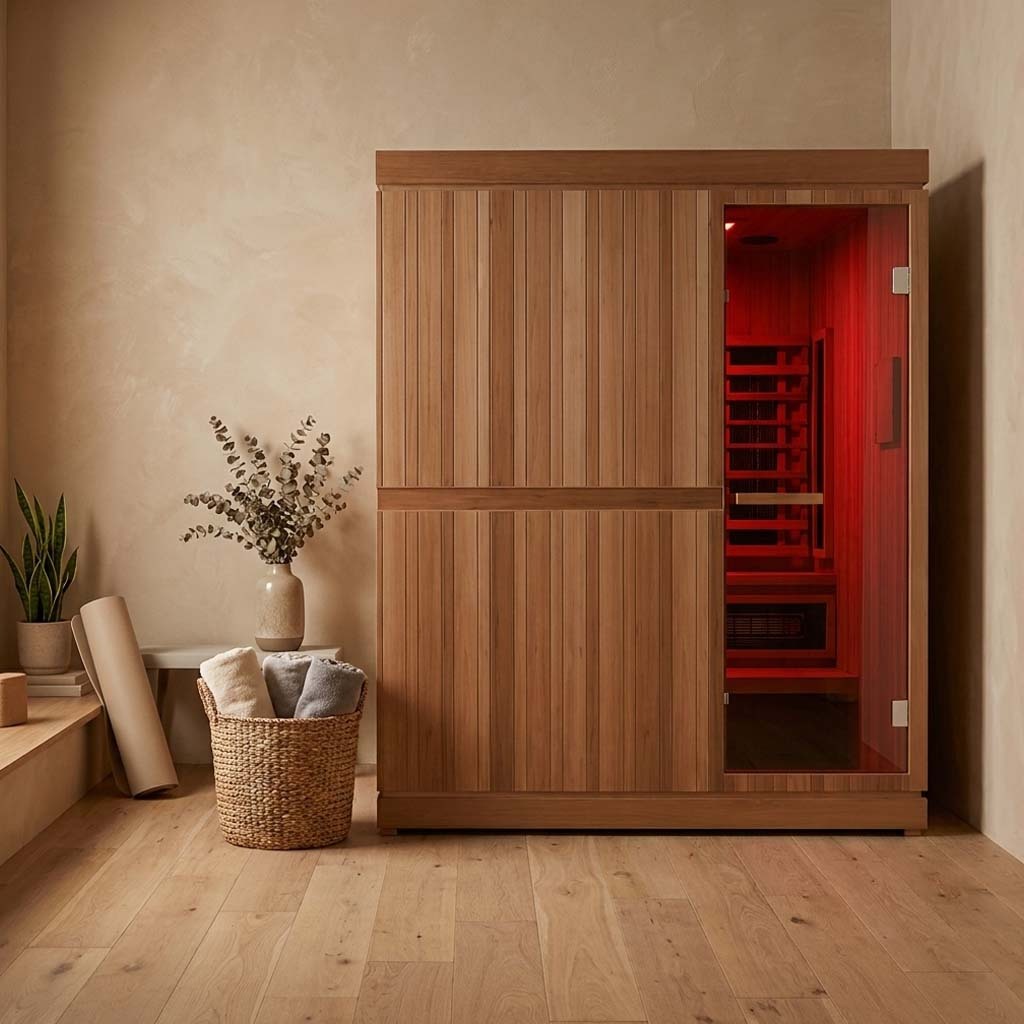
How Infrared Saunas Work (Plus, Why They Feel Different)
Infrared is a form of light you can feel but cannot see because it exists just beyond the red end of the visible spectrum. When infrared panels are directed at the body, that energy is absorbed as warmth, similar to how sunlight warms your skin on a cold day. The key difference is that the surrounding air remains comparatively mild, since the heat is directed into the body rather than into the room itself.
Traditional saunas work in the opposite way. Instead of heating the body directly, they heat the surrounding air to very high temperatures, which then transfers heat to the body.
Traditional sauna
- Traditional sauna temperatures commonly exceed 170°F.
- Experienced sauna users may tolerate temperatures above 210°F, usually for short sessions only.
- Water poured over heated stones creates steam, known in Finnish culture as löyly, producing the intense, enveloping heat associated with the classic sauna ritual.
Infrared Saunas
Infrared saunas skip the steam process entirely and operate at lower ambient temperatures.
- Cabin temperatures generally stay between 120°F and 150°F.
- The gentler environment is often easier to breathe in and more comfortable for longer sessions.
- Even with the lower air temperature, infrared saunas still produce a deep sweat because the heat penetrates the body directly.
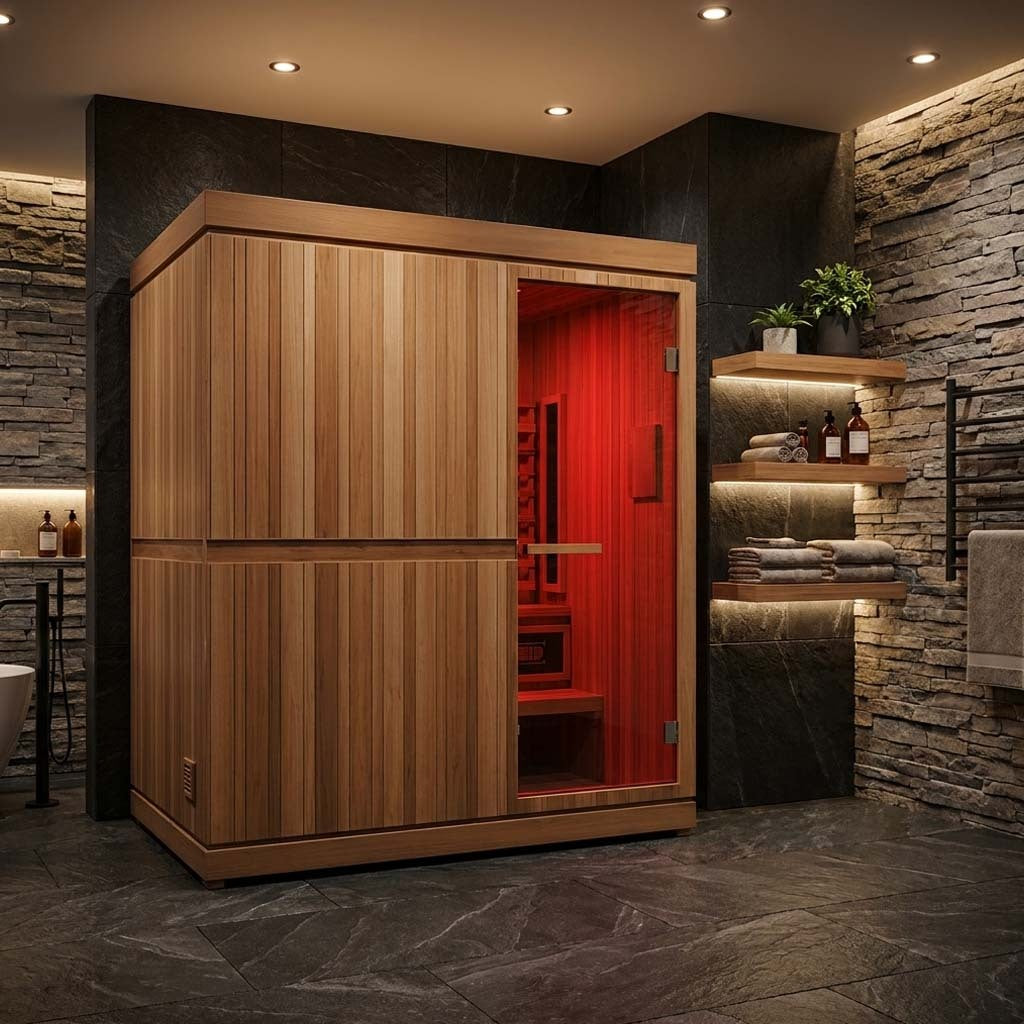
Both sauna styles are effective at creating a strong sweat response, but they achieve it through entirely different heating methods. There are also hybrid sauna models that combine infrared panels with a traditional stone heater in the same unit, allowing users to switch between experiences depending on the session.
Infrared heaters use different wavelengths to get different results, and the differences are far more than merely cosmetic. Near-infrared targets the skin surface and is associated with skin health benefits. Mid-infrared reaches into joints and soft tissue, while far-infrared penetrates deepest into muscle mass.
Some saunas use only far-infrared; others combine all three wavelengths for broader coverage across different tissue depths.
On the heater side, carbon panel heaters are the most common and tend to produce a lower, even heat output across a large surface area. Ceramic and Incoloy® (an alloy of nickel, iron, and chromium) heaters produce more intense, more concentrated heat and reach higher temperatures. Many high-quality saunas combine both types to get wide surface coverage alongside high heat output.
Indoor vs Outdoor vs Hybrid Infrared Saunas: Which Is Right for You?
The first decision in any sauna installation process is, fundamentally, where the sauna goes. Everything else follows from that.
Indoor infrared saunas are freestanding cabins that assemble on any flat, stable surface, e.g., hardwood, carpet, tile, or concrete. Smaller models (1-2 person) plug directly into a standard 120V outlet, meaning no electrician and no permit in most jurisdictions. No special ventilation is required, either. Indoor saunas are the most popular home infrared format because the barrier to setup is low and the year-round access is easy.
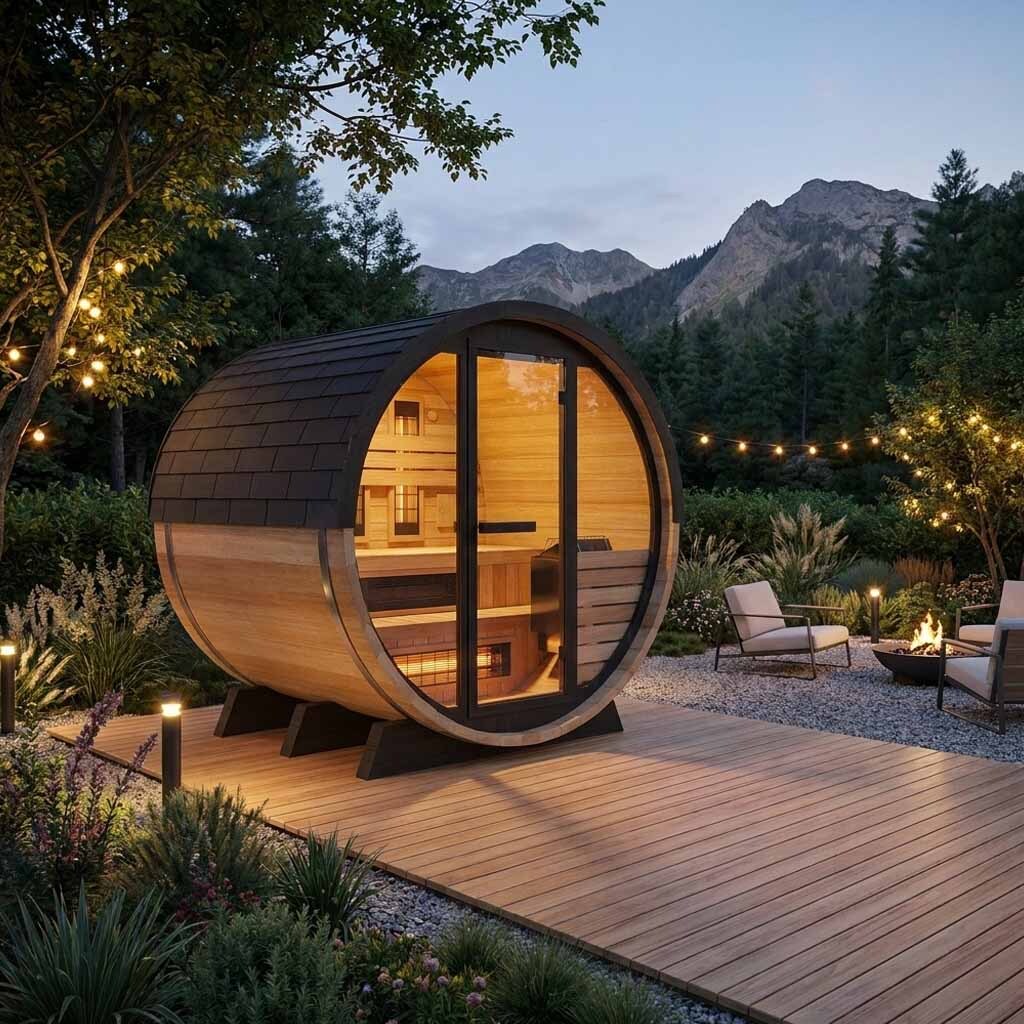
Outdoor infrared saunas are built to live outside in all seasons. Most use a barrel configuration, with thick wood staves, sealed tempered glass, stainless steel hardware, and weatherproof roofing designed for temperature extremes in both directions. They require a level foundation (a concrete pad or compacted gravel base works well) and a dedicated 240V circuit. The payoff is that they free up interior space entirely and tend to make a strong visual impression in a backyard or pool area.

Hybrid infrared and steam saunas house both heating systems in one structure. You can run infrared only, use the heater and pour water on the stones for a session with traditional löyly, or run both at once. Hybrid models are available in indoor and outdoor configurations, and can be the right choice for buyers who do not want to commit to one experience, or who share the sauna with a partner who has different preferences. That said, the extra options and complexity often come with the tradeoff of a higher price point.
Quick Comparison
- Indoor infrared saunas: Best for convenience, simple installation, and year-round accessibility. Most smaller models operate on standard 120V power.
- Outdoor infrared saunas: Best for saving indoor space and creating a backyard retreat. Most models require a dedicated 240V circuit.
- Hybrid saunas: Best for flexibility and users who want both infrared and traditional steam experiences.

Infrared Sauna Benefits
Infrared sauna use has been studied across a range of health and wellness applications. Regular users commonly report experiencing some or all of the outcomes below:
- Muscle recovery and pain relief. Infrared heat increases blood flow to muscles and joints, which delivers more oxygen to damaged tissue and helps clear metabolic waste faster. This is the mechanism behind infrared therapy's established use in sports medicine and physical therapy settings.
- Circulation and cardiovascular response. During a session, heart rate rises and blood vessels dilate in a response similar to moderate aerobic exercise. Repeated infrared sauna use has been studied for effects on resting blood pressure and vascular function, with promising results, particularly for people who face barriers to conventional exercise.
- Stress reduction and sleep. Heat exposure triggers endorphin release and can help lower circulating cortisol. Many regular users report reduced tension and improved sleep quality, particularly when sessions are scheduled in the early evening.
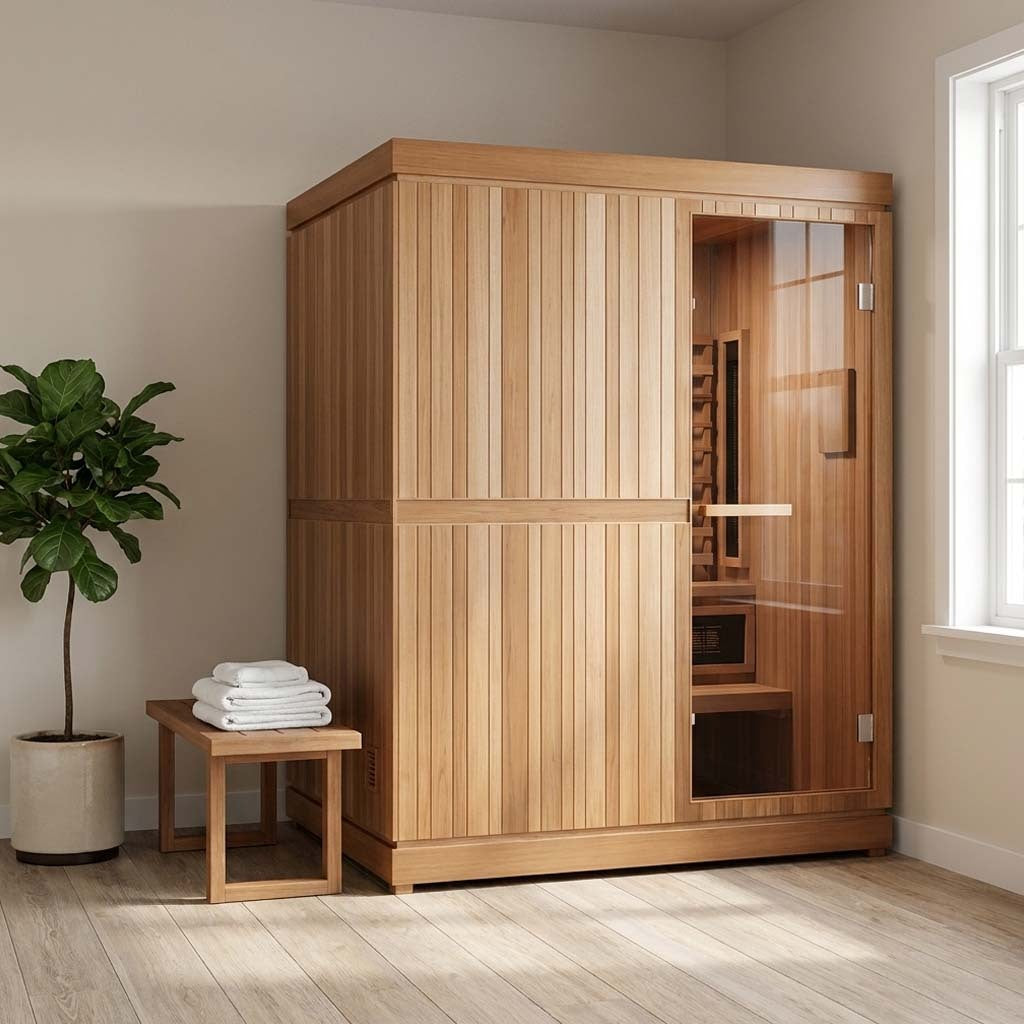
- Skin health. Near-infrared wavelengths have been studied for their role in supporting collagen production and skin clarity. Some infrared saunas include dedicated red light therapy panels, typically operating around 650 nanometers, that target skin-level benefits as a separate function from the heat panels themselves.
- Detoxification. Infrared saunas produce deep, sustained sweating, and sweat does contain trace amounts of heavy metals and other compounds. The extent to which this constitutes meaningful detoxification remains actively debated in the medical community; however, it is a real phenomenon with limits worth understanding.
The benefits described above are based on existing research and user experience. These statements have not been evaluated by the FDA. Infrared saunas are not medical devices and are not intended to diagnose, treat, cure, or prevent any disease. Consult your physician before beginning sauna therapy, especially if you have cardiovascular conditions, are pregnant, or take medications that affect heat sensitivity.
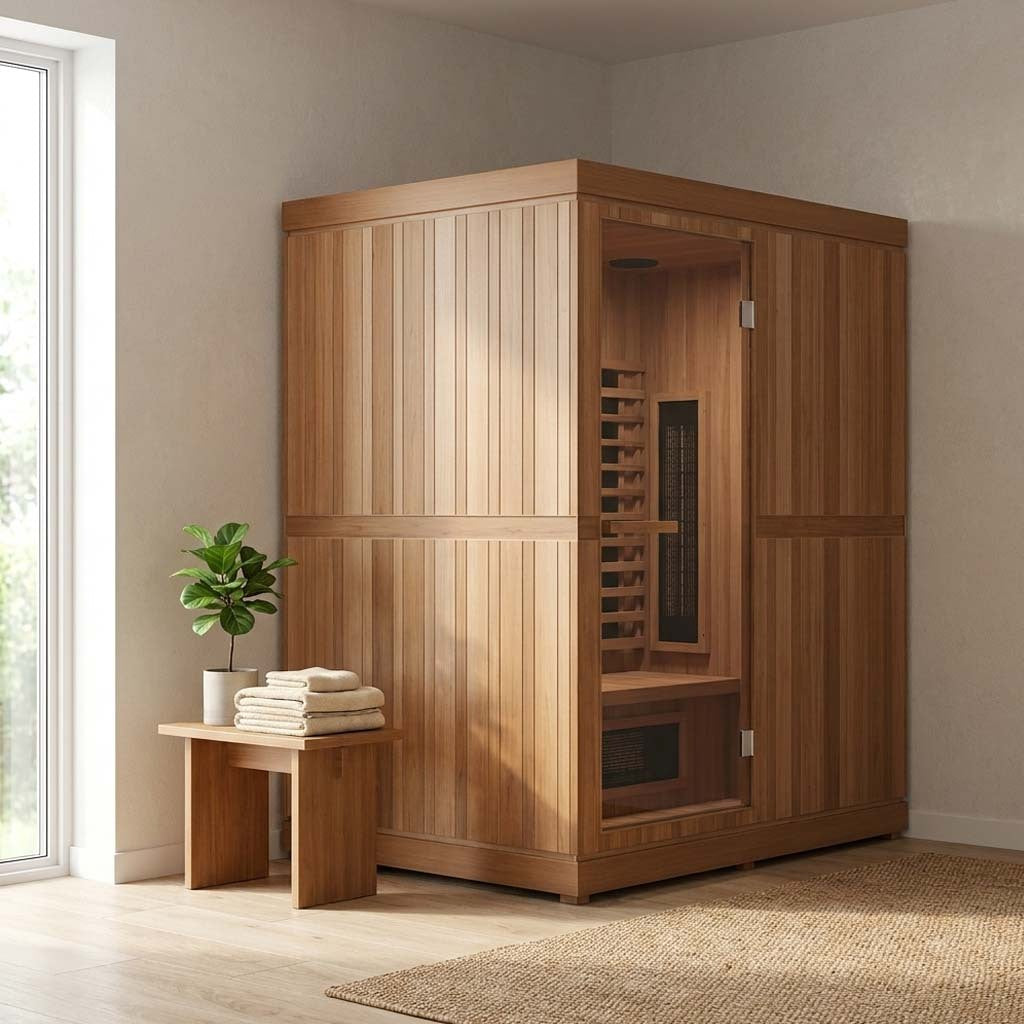
Infrared Sauna Sizing Guide From 1 to 6 People
Next to determining where your sauna will go, the second biggest question is: Who (and how many) will use it? Sauna size determines footprint, electrical requirement, and price.
- 1-person infrared saunas. The most compact option, typically under 40 inches wide, and the best fit for solo use, apartments, home offices, or anywhere square footage is tight. Most 1-person models run on a standard 120V outlet with no electrician required. Quality builds start around $4,000.
- 2-person infrared saunas. The most popular size in the category. In a 2-person sauna, there is enough room for two people side by side, or for a single user who wants space to stretch out or lie down. Most 2-person saunas still run on 120V and fit comfortably in bedrooms, basements, and garages without dominating the space. This is the entry point for most couples and a practical upgrade for solo buyers who simply want more room.
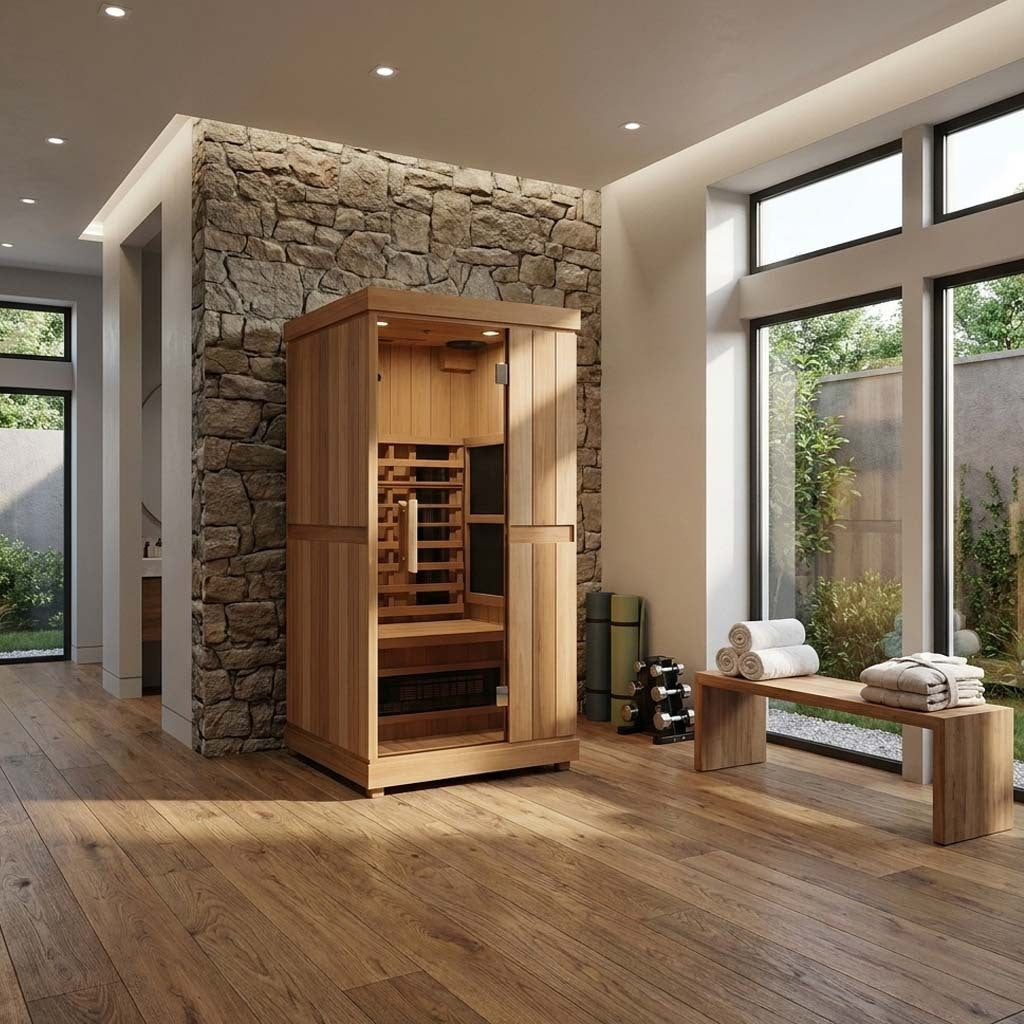
- 3 to 4-person infrared saunas. These are built for family or regular shared use. The larger footprint means you will want a dedicated area, like a basement, garage, or covered outdoor space, and models in this range often require a 240V circuit. A 4-person model is typically the size at which you start getting benches on multiple walls.
- 5 to 6-person infrared saunas. The largest residential configurations, and suitable for light commercial use as well, like wellness studios, Airbnb properties, or upscale home gyms. Almost all 5- and 6-person models require 240V. These are built for buyers who prioritize group access and are not working within space constraints.
- A note on budget. Infrared sauna cost varies by size, heater technology, wood quality, and whether the unit is rated for outdoor use. Budget far-infrared-only cabins start around $1,500 to $3,000, but use lower-grade heaters and single-wall construction. Quality infrared saunas with premium wood, insulated walls, and advanced heater configurations range from $4,000 to $10,000 depending on size and type, and the construction gap between those two price points is real.
Not sure which size fits your space? Contact Us for a sizing consultation, or use the 📐 Size Calculator to get a quick answer.
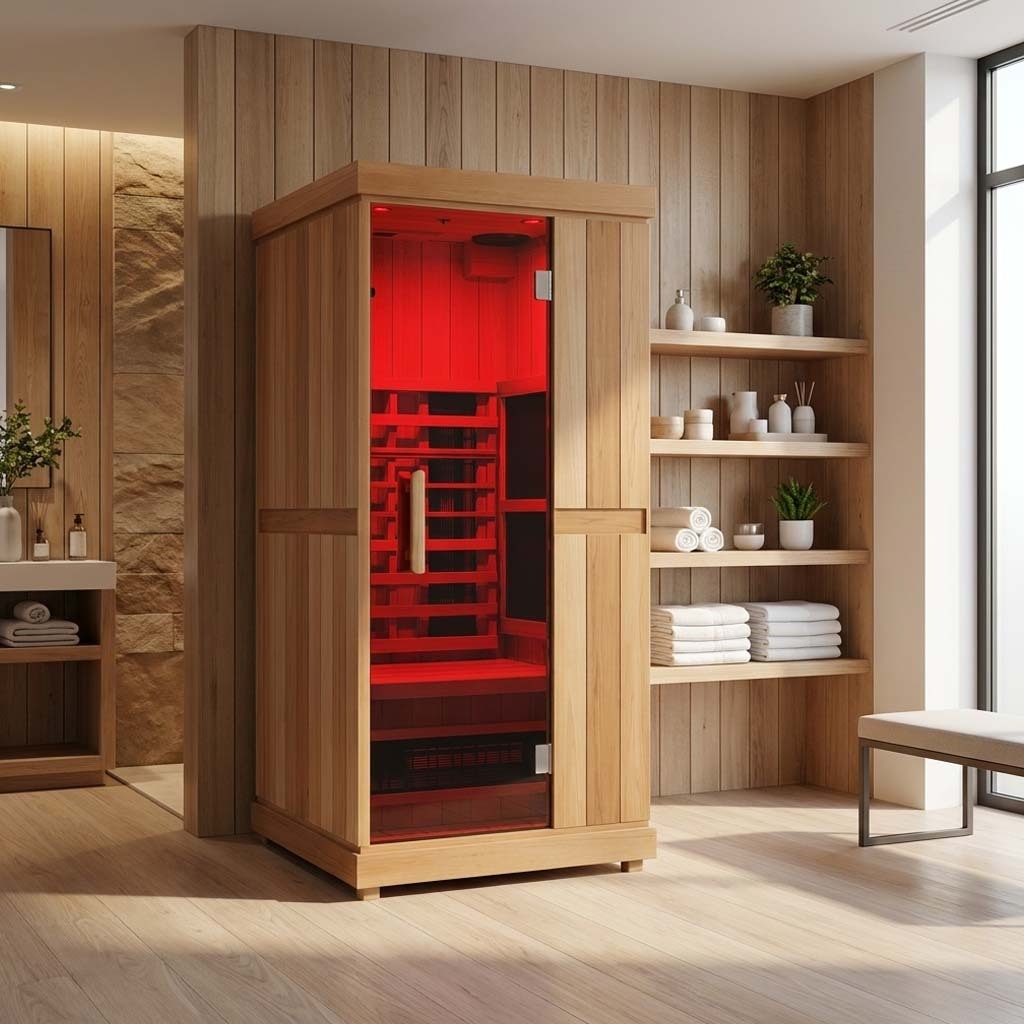
How to Choose an Infrared Sauna
The infrared sauna price range is wide, and the gap between a low-end unit and a premium unit is not arbitrary. Here is what actually separates a quality infrared sauna from a cheap one.
- Heater type and certification. Carbon panel heaters produce a wide, even heat and are a solid baseline. Saunas that combine carbon panels with ceramic or Incoloy® heaters reach higher peak temperatures and deliver deeper tissue penetration. Regardless of type, look for heaters that are UL or ETL listed, since these certifications indicate independent testing for electrical safety. A heater without a recognized listing is a red flag.
- EMF testing. All electrical devices produce electromagnetic fields, and in an infrared sauna, the heater panels sit close to your body for 20 to 45 minutes at a stretch. Look for models tested by a third-party laboratory with published, specific results, rather than a marketing label that says "low EMF" without supporting data anywhere to be found.
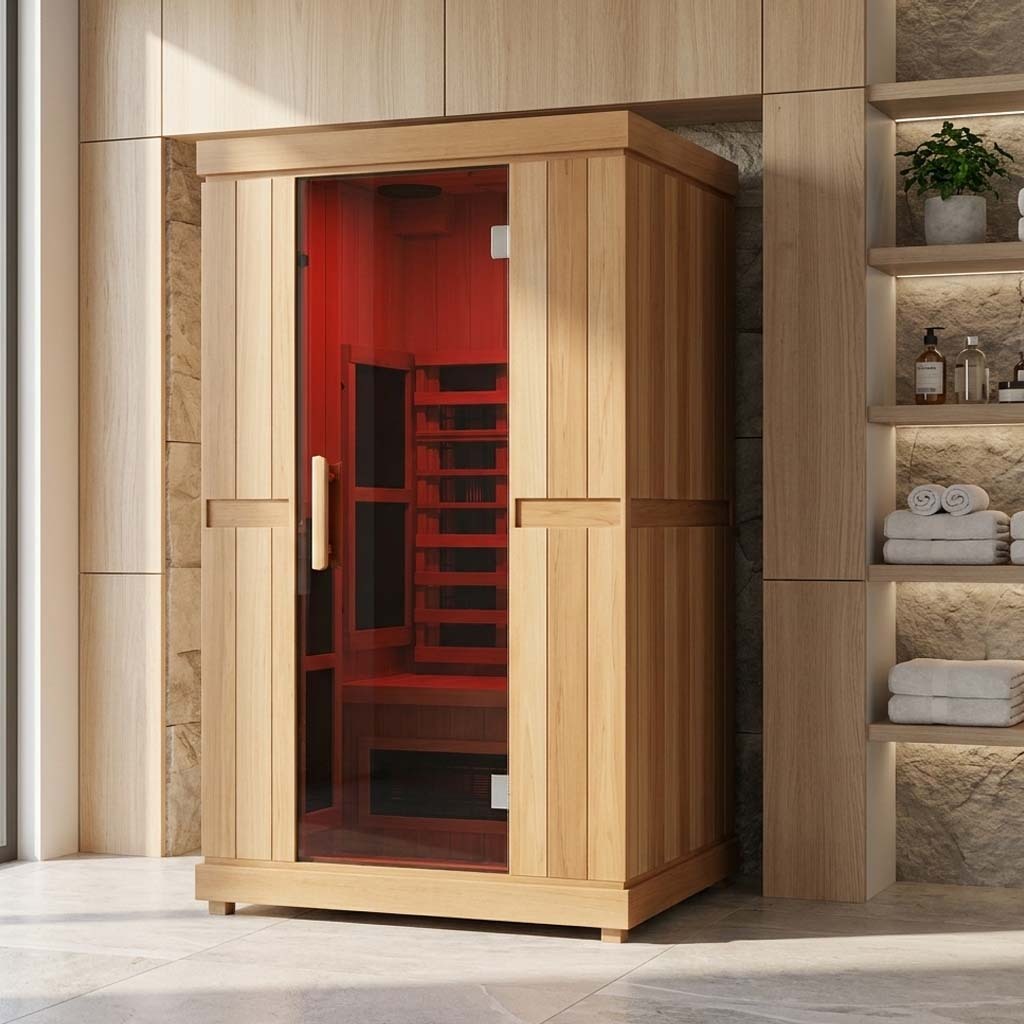
- Wood quality. A sauna is 90% wood. The interior should be antimicrobial and heat-stable; Western Red Cedar is the industry benchmark. The exterior, especially on outdoor models, should be thermally treated or naturally rot-resistant. Avoid saunas built with untreated softwood or plywood interior panels.
- Insulation. Double-walled construction with mineral wool or equivalent insulation retains heat dramatically better than single-wall designs. The practical difference is reaching target temperature in 30 minutes versus 60 or more.
- Glass. 8mm tempered glass is the standard for quality builds. Thinner glass sheds heat and is more susceptible to thermal stress over time.
Watch out for: no UL or ETL listing, no published third-party EMF data, single-wall construction, and any warranty shorter than five years.
Infrared Sauna Maintenance and Care
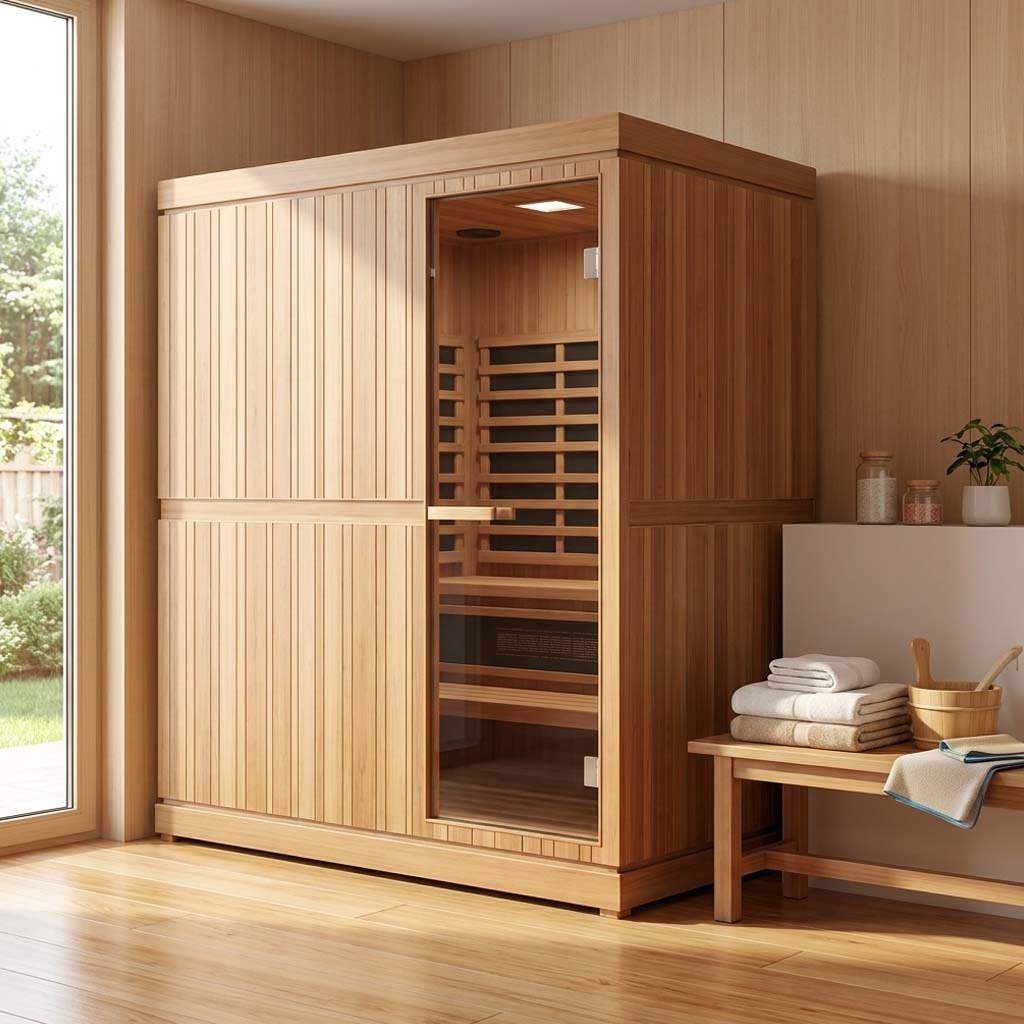
Infrared saunas are among the lowest-maintenance wellness investments you can make. There is no water system, no stones to replace, and no humidity-driven mold risk. Most of what you need to do takes about five minutes after each session.
How to Clean an Infrared Sauna
- Since infrared saunas generate dry heat rather than steam, they usually require much less cleaning and maintenance than traditional steam saunas
- After each use, wipe down the benches, backrests, and interior walls with a clean, lightly damp cloth while the wood is still warm to remove sweat residue before it absorbs into the grain
- Leave the door slightly open for 15 to 20 minutes after each session to air out the interior
- A deeper cleaning every few weeks helps keep the sauna fresh and well-maintained. To remove dirt and residue without harming the wood, gently scrub the benches and flooring with a soft brush and a gentle homemade cleaning mixture. After cleaning, wipe away any remaining moisture and allow the surfaces to dry fully with proper airflow.
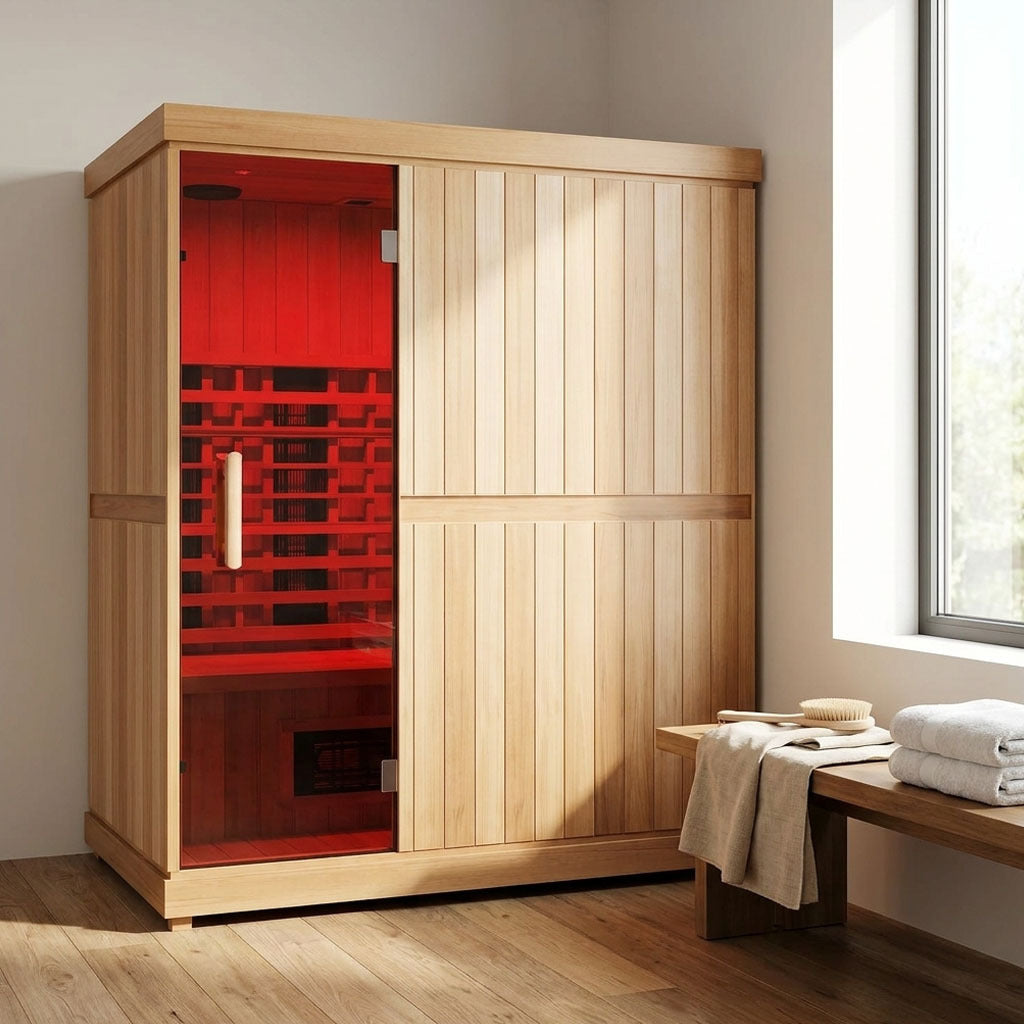
- Never use commercial cleaning products, bleach, or soap that leaves a residue as these compounds off-gas at sauna temperatures
How to Care for Infrared Sauna Wood
- Never paint, stain, or varnish the interior wood of a sauna. Interior coatings can interfere with the wood’s natural breathability and may release unpleasant or harmful fumes when exposed to high heat.
- Lightly sand interior benches and surfaces with 120-grit or 150-grit sandpaper if they begin to look dry, stained, or worn.
- Avoid using harsh chemical treatments or finishes inside the sauna.
- For outdoor saunas, apply a water-based UV protectant or sauna-safe exterior oil annually to help protect the wood from sun exposure, moisture, and changing weather conditions.
Infrared Sauna Heater Maintenance
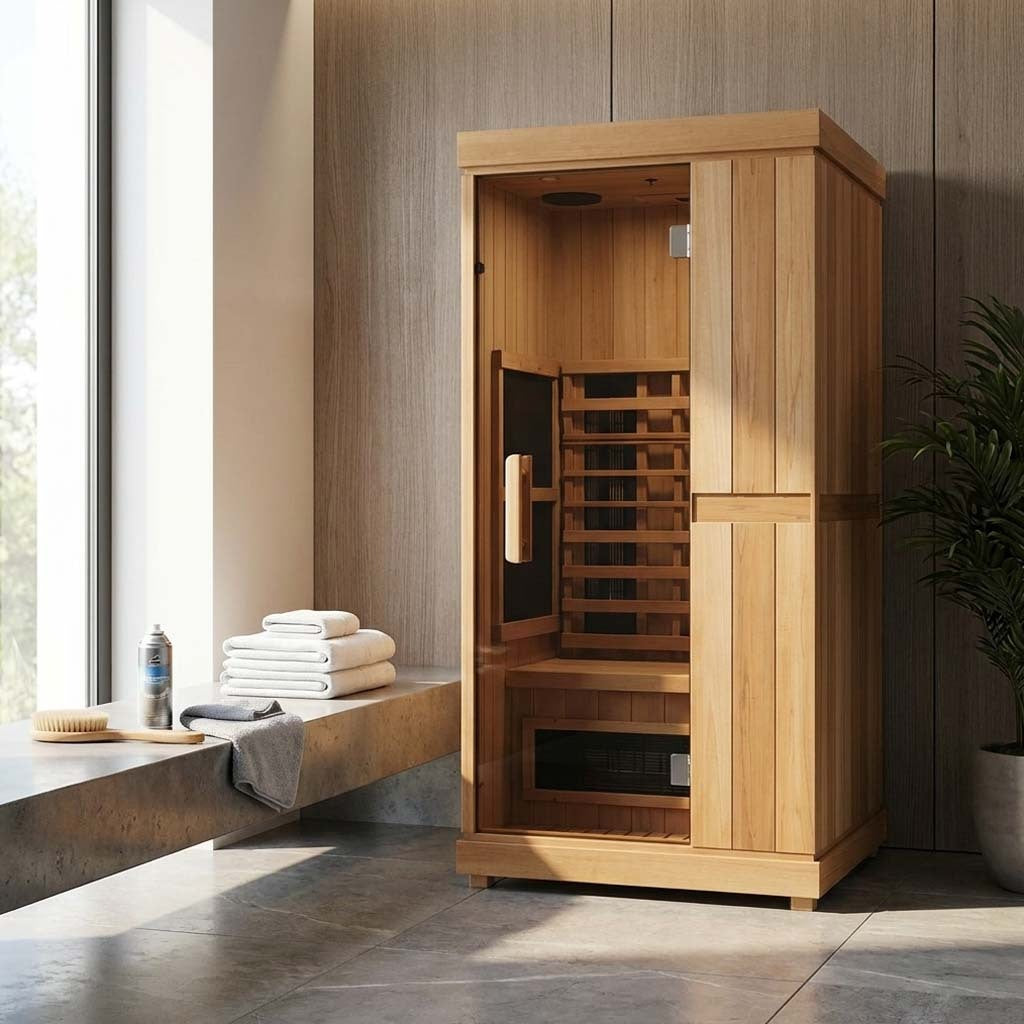
- Infrared heater panels require almost no maintenance during normal use
- Once the unit is completely cool, periodically dust the panel surfaces with a soft cloth or lint roller
- For heaters with protective guards or casings, a short burst of compressed air clears accumulated dust without touching the panel surface directly
Infrared Sauna Lifespan and Longevity
- A well-maintained infrared sauna cabin, including the wood structure, glass, and hardware, can last 10 to 20 years, depending on construction quality and whether it is installed indoors or outdoors
- Infrared heater panels typically last 10 to 15 years before output begins to degrade measurably
- Heater panels are generally field-replaceable, meaning the cabin can outlast multiple sets of heaters
For towels, brushes, and cleaning supplies, browse the Sauna Accessories collection

Why Buy Infrared Saunas from SaunaHeaters.com?
- Carefully curated selection rather than a massive marketplace: Every brand is evaluated against the same standards
- Every purchase comes with the full manufacturer warranty
- Free shipping
- No sales tax
- SaunaHeaters.com is an authorized dealer, and all orders are fulfilled by us, not a third-party fulfillment center
- All heaters are certified with third-party EMF testing and premium wood construction
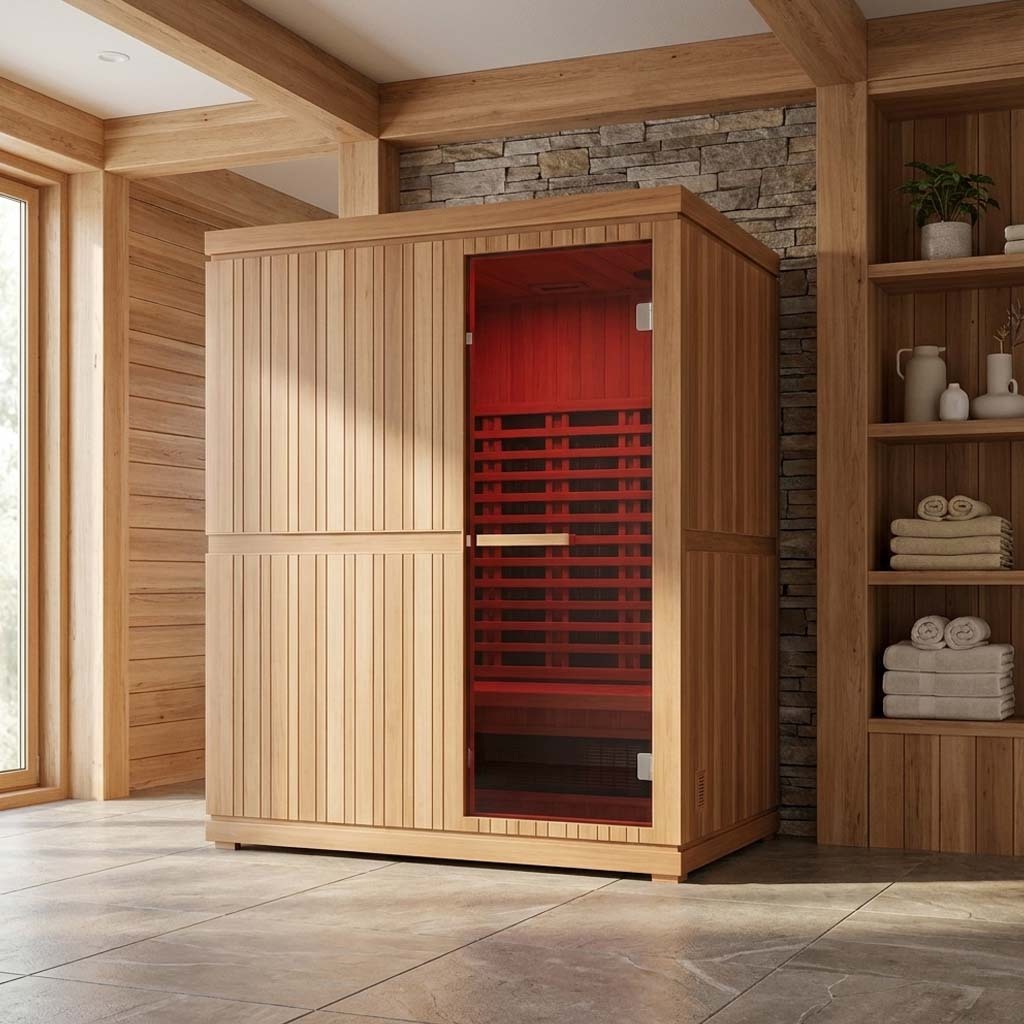
- The infrared collection is centered around Finnmark Designs infrared saunas, a brand that SaunaHeaters.com considers among the top in the market, while additional brands are evaluated on an ongoing basis.
- Expert pre-purchase support from sauna specialists with real knowledge of infrared technology, heater sizing, and electrical requirements
- Outstanding customer support after the purchase, when it is needed most.
- SaunaHeaters.com was founded from firsthand experience with Finnish sauna culture, a tradition that has treated sauna as a serious wellness practice for generations
Frequently Asked Questions
What are the benefits of using an infrared sauna?
What are the benefits of using an infrared sauna?
Infrared saunas are used for a wide range of wellness applications. The most commonly reported and studied benefits include:
- Muscle recovery and pain relief. Infrared heat increases blood flow to muscles and joints, accelerating tissue repair and clearing metabolic waste
- Cardiovascular response. Heart rate rises and blood vessels dilate during sessions, producing effects similar to moderate aerobic exercise
- Stress and sleep. Heat exposure triggers endorphin release and can lower cortisol; many regular users report improved sleep quality
- Skin health. Near-infrared wavelengths have been studied for collagen support and skin clarity
- Detoxification. Infrared saunas produce deep, sustained sweating; sweat contains trace amounts of heavy metals and other compounds, though the extent of detoxification through sweating is still debated medically
Individual results vary. Infrared saunas are not medical devices and are not intended to diagnose, treat, or cure any condition.
What is the difference between an infrared sauna and a traditional sauna?
What is the difference between an infrared sauna and a traditional sauna?
The core difference is how heat is delivered. A traditional sauna heats the surrounding air, typically to 170°F or above, and your body absorbs that heat from the hot air around you. Pouring water on heated stones adds steam (löyly) and produces the sharp, enveloping sensation that defines the Finnish sauna experience.
An infrared sauna skips the hot air entirely. Infrared panels emit light that your body absorbs directly as warmth, at cabin air temperatures that typically stay between 120 and 150°F. Both approaches produce a deep sweat. Infrared tends to be more tolerable for longer sessions; traditional saunas offer the steam ritual that infrared cannot replicate. Hybrid models house both systems in one unit for buyers who want both.
How do infrared saunas compare to traditional saunas in terms of heat?
How do infrared saunas compare to traditional saunas in terms of heat?
Infrared saunas run cooler, typically topping out around 150°F, while traditional saunas tend to start around 170°F and, at the top end, can exceed boiling point. Despite the lower air temperature, the sweat response is comparable, because infrared heat works on the body directly rather than through the surrounding air. Most people find infrared sessions easier to breathe through and easier to sustain for 30 to 45 minutes.
Do infrared saunas need special electrical wiring?
Do infrared saunas need special electrical wiring?
It depends on the size. Most 1-person and 2-person infrared saunas plug into a standard 120V household outlet, with no electrician, no dedicated circuit, no permit required in most cases. Larger models (3-person and up) and virtually all outdoor infrared saunas require a dedicated 240V circuit, which does require a licensed electrician to install. Always check the voltage and amperage specs for any model before purchasing, particularly if you are planning to use an existing outlet.
Can I put an infrared sauna outdoors?
Can I put an infrared sauna outdoors?
Yes, provided you choose a sauna built specifically for exterior use. Outdoor infrared saunas are constructed with weather-resistant materials, like thick wood staves, sealed tempered glass, stainless steel hardware, and weatherproof roofing, that are designed for year-round exposure. They also require a level foundation and a dedicated 240V electrical circuit.
A standard indoor infrared sauna cabin is not rated for outdoor use and should not be placed outside, even under a covered patio.
What size infrared sauna do I need?
What size infrared sauna do I need?
Start by considering how many people will use it regularly, then factor in your available space and electrical setup:
- 1 person : solo use, tight spaces, apartments; 120V; under 40 inches wide
- 2 person: the most popular size; fits couples or solo users who want to stretch out; usually 120V
- 3 to 4-person: family or shared use; larger footprint; typically requires 240V
- 5 to 6-person: large households or light commercial use (e.g., Airbnb, wellness studio); almost always 240V
If space is the primary constraint, a 1- or 2-person infrared sauna can fit in most bedrooms, basements, or large spare rooms without any structural changes.
How much does an infrared sauna cost?
How much does an infrared sauna cost?
Budget far-infrared-only models can be as cheap as $1,500. However, at that price point, you are typically looking at lower-grade heaters, single-wall construction, and thinner glass. Quality infrared saunas, with premium wood, double-wall insulated panels, certified heaters, and published EMF testing, start at $4,000 and can get to $10,000, depending on size and configuration. The construction gap between those two price bands is real and affects both performance and longevity.
Are infrared saunas good for muscle recovery?
Are infrared saunas good for muscle recovery?
Yes, and it is one of the more well-supported applications for infrared heat. Increased blood flow to fatigued muscles delivers more oxygen to damaged tissue and helps clear metabolic byproducts like lactic acid. Research suggests regular post-exercise sessions may reduce soreness and shorten recovery time. It is not a replacement for sleep and nutrition, but it is a legitimate tool.
Can infrared saunas be used commercially?
Can infrared saunas be used commercially?
Larger models (5- to 6-person) are used in spas, yoga studios, physical therapy offices, and short-term rentals. For commercial use, prioritize:
- Heaters rated for extended daily session volumes
- Warranty terms that cover commercial use specifically
- Construction quality designed for high-traffic environments
Most residential saunas are designed for one to three sessions per day. High-traffic settings may require units rated beyond that threshold.
Are infrared saunas safe?
Are infrared saunas safe?
For virtually all healthy adults, yes. Infrared saunas run at lower ambient temperatures than traditional saunas, which most people tolerate easily. However, you should consult a physician before use if you are pregnant, have cardiovascular conditions, take medications that affect heat sensitivity or sweating, or have any condition that impairs thermoregulation. In general: hydrate well, start with 15 to 20 minute sessions, and avoid alcohol before or during use.