


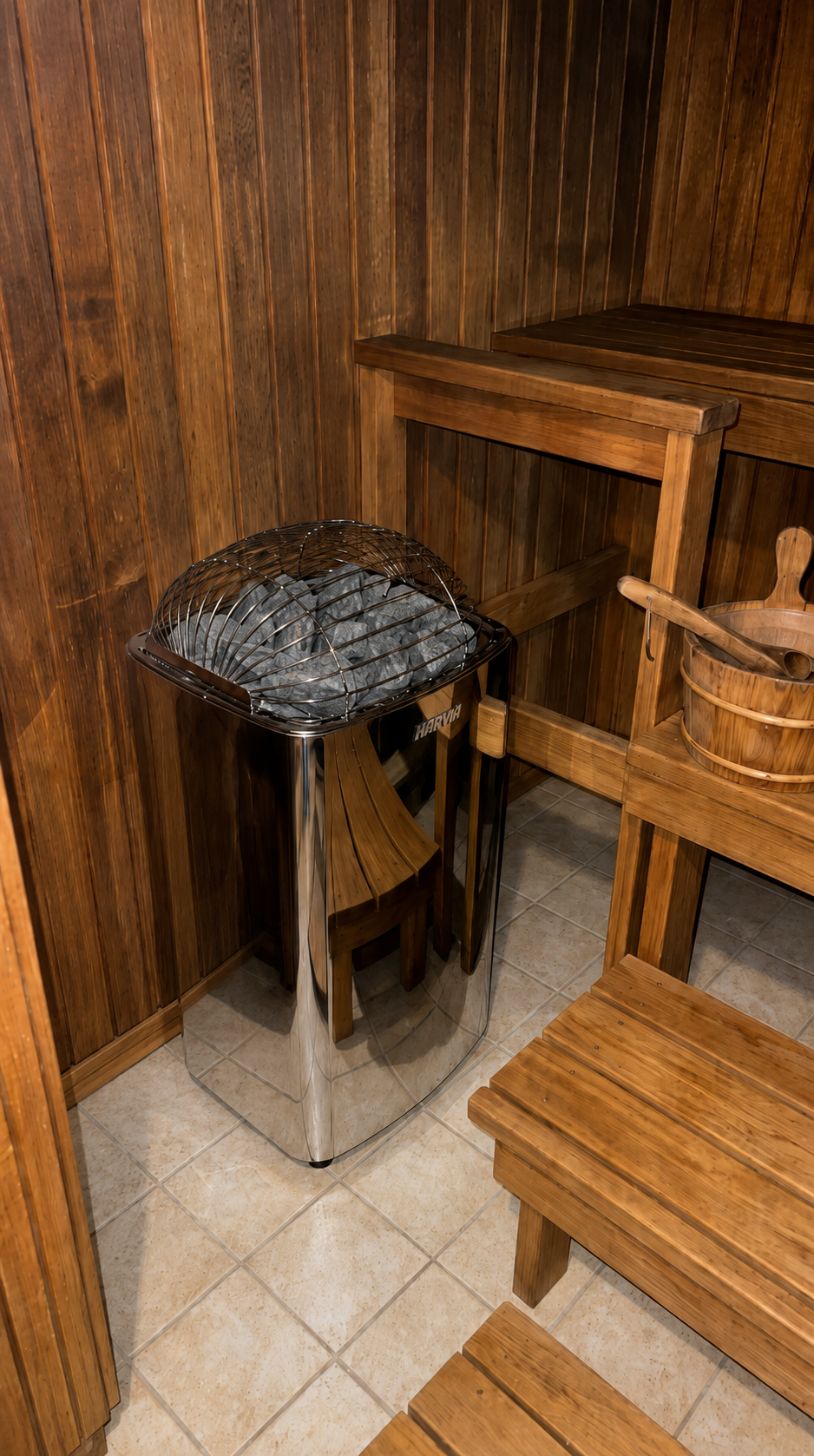

Quick answer: A sauna can improve buyer appeal and may contribute to a higher sale price in the right market, but there is no reliable national benchmark showing that a sauna adds a fixed dollar amount or percentage to a home's value. The biggest drivers are local buyer demand, installation quality, permits, placement, the home's price tier, and how naturally the sauna fits the property.
Wellness-oriented housing is a growing category. In May 2026, the Global Wellness Institute reported that the global wellness real estate market totaled $876 billion in 2025, with $254 billion generated in the United States. By 2030, the market is expected to reach $1.8 trillion. That supports broader demand for wellness-focused living, but it is not proof that a sauna alone creates a specific resale premium.
Key Takeaways
Sauna impact on home value: A well-designed sauna can make a property more distinctive and desirable, especially in luxury, vacation, cold-weather, and wellness-focused markets. The value is market-dependent, not guaranteed.
Indoor vs. outdoor sauna: An indoor sauna keeps the experience close and convenient, while an outdoor sauna can complement a backyard or resort-inspired space. Which one adds more appeal depends on the property and local buyers.
Sauna ROI: There is no widely accepted national percentage for sauna return on investment. For most homeowners, a sauna is better viewed as a lifestyle upgrade and specialty amenity than as a renovation with a predictable dollar-for-dollar return.
Considering installing a sauna before listing your home for sale? Many homeowners are exploring the same idea. As wellness trends continue to reshape today's real estate market, more homeowners are wondering whether a sauna installation will actually pay off when it's time to sell. There's no simple yes-or-no answer, but gaining clarity on the influencing factors can help you determine whether this popular home upgrade is worth pursuing.
In this guide
- The Growing Appeal of Luxury Wellness Home Features
- Does a Sauna Add Value to a House?
- Real-World Example: Two Lennar Homes in Storey Lake Resort
- Understanding Sauna Addition ROI for Home Resale
- Indoor vs. Outdoor Sauna: Which Adds More Value?
- Infrared Sauna vs. Traditional Sauna Resale Value
- Best Home Upgrades for Resale: Where Does a Sauna Rank?
- Location, Market and Buyer Fit
- Quality and Integration Are Everything
- Is a Sauna Investment Right for Your Home?
- Frequently Asked Questions
The Growing Appeal of Luxury Wellness Home Features
The home wellness movement has exploded in recent years, transforming how buyers evaluate properties. Once seen as an exclusive indulgence found only in upscale spas and resort hotels, it has now become a practical and accessible feature for many homeowners.
Saunas, along with home gyms, meditation rooms, and spa-like bathrooms, represent a broader shift toward creating personal wellness-focused retreats within our living spaces.
The broader wellness real estate market is expanding quickly. According to the Global Wellness Institute's 2026 market update, wellness real estate grew from $151 billion globally in 2017 to $876 billion in 2025. The U.S. was the largest national market at $254 billion in 2025.
Earlier GWI research found evidence of price premiums for some wellness-oriented residential properties at the middle and upper ends of the market. Those findings apply to complete wellness-focused properties and communities, not to a sauna installed in isolation. The practical takeaway is that wellness can support property positioning, but one sauna's resale value still depends on local market evidence.
For readers interested in the wellness side of the purchase decision, our science-based guide to sauna health benefits reviews the research separately from the real-estate question discussed here.
Does a Sauna Add Value to a House?

The answer to the question "Does a sauna increase home value?" is simple: it depends. A sauna's impact on home value depends on several key variables, such as your local real estate market, the quality of the installation, the type of sauna selected, and your home's overall price range.
In luxury markets where buyers expect premium amenities, a well-executed sauna can enhance a home's appeal and potentially support a higher asking price. In more modest markets, or among buyers who do not prioritize wellness features, it may not materially affect the sale price.
A sauna in a home that already boasts a spa-like primary bathroom, finished basement, or resort-style backyard makes more sense to buyers than one awkwardly added to an otherwise basic property.
What Determines How Much Value a Sauna Adds?
| Factor | Potential Resale Effect | What Matters Most |
|---|---|---|
| Local buyer demand | High | Saunas matter more where wellness, outdoor recreation, or luxury amenities are already valued. |
| Installation quality | High | Professional electrical work, ventilation, moisture control, clearances, and workmanship can reduce buyer concerns. |
| Permits and documentation | High when required | Missing approvals can create inspection, insurance, or closing questions. |
| Placement and integration | Medium to high | A sauna beside a primary bath, gym, pool, or designed outdoor retreat usually feels more intentional. |
| Home price tier | Market-dependent | A premium amenity is easier to justify where buyers already expect upgraded finishes and lifestyle features. |
| Sauna type | Context-dependent | Traditional, infrared, indoor, and outdoor saunas appeal to different buyers. No type has a universal resale advantage. |
Real-World Example: Two Lennar Homes in Storey Lake Resort
A useful real-world comparison comes from Storey Lake Resort in Kissimmee, Florida, where two closely matched Lennar-built homes on Fable Street sold in 2026. Both were built in 2018, contain 4,303 square feet of living space, have five bathrooms, and include private pool-and-spa outdoor areas. One listing specifically marketed a sauna; the other did not.
| Feature | Home With Sauna | Comparison Home |
|---|---|---|
| Address | 2933 Fable St | 2901 Fable St |
| Builder/Community | Lennar / Storey Lake Resort | Lennar / Storey Lake Resort |
| Year built | 2018 | 2018 |
| Living area | 4,303 sq. ft. | 4,303 sq. ft. |
| Bathrooms | 5 | 5 |
| Private pool/Spa | Yes | Yes |
| Sauna | Yes, listed as an exterior feature | No sauna listed |
| Sale date | April 13, 2026 | August 14, 2026 |
| Sale price | $880,000 | $770,000 |
| Price per sq. ft. | $205 | $179 |
The sauna-listed home sold for $110,000 more, a 14.3% higher sale price, than the comparison home. Although the homes sold at noticeably different prices, the sauna's specific impact on the difference cannot be determined. The higher-priced property also had a larger lot, owned solar panels, water views, and a different bedroom configuration.
What the comparison does show is that a sauna can be part of the broader lifestyle package that differentiates a property. This case should be viewed as evidence of how a sauna can strengthen wellness and resort-lifestyle positioning, and can contribute towards getting top dollar.
Understanding Sauna Addition ROI for Home Resale
There is currently no authoritative national report that assigns a standard resale ROI to a residential sauna. The 2025 Cost vs. Value Report compares costs and resale values for 28 common remodeling projects across U.S. markets, but it does not include saunas. Claims that a sauna automatically adds a fixed percentage to home value should therefore be treated cautiously.
A more defensible way to think about sauna ROI is as a combination of two benefits: the personal value you receive while you own the home and the potential resale advantage of having a distinctive, well-executed wellness amenity when you eventually sell.
Unlike kitchens and bathrooms, which consistently rank among the best home improvements for resale, saunas occupy a more niche category.
A sauna can still be a powerful differentiator in a competitive market, helping a property stand out from similar listings. It may attract more showings, strengthen buyer interest, or support faster decision-making, although those benefits do not translate into a guaranteed dollar-for-dollar return.
Indoor vs. Outdoor Sauna: Which Adds More Value?
The location of your sauna plays a major role in its impact on resale value, especially when comparing outdoor versus indoor installations.
Outdoor saunas can add meaningful lifestyle appeal when they improve an already attractive outdoor-living area, but they should not be assumed to receive a separate or automatic appraisal premium.
If an outdoor model fits your property, our guide to the best outdoor saunas for home compares popular formats, sizes, and design considerations.
Outdoor saunas tend to add the most appeal when the property is in a region that values recreation and natural living, the lot has room for intentional design, and the sauna is integrated with a pool, hot tub, cold plunge, landscaping, or relaxation area.
Indoor saunas offer convenience and year-round usability. They work particularly well beside a primary bathroom, in a finished basement wellness area, or where outdoor space is limited. The better choice is the one that fits the property and likely buyer, not a format that is presumed to have a universal premium.
Infrared Sauna vs. Traditional Sauna Resale Value

If you are deciding between the two formats, see our infrared vs. traditional sauna comparison for a detailed breakdown of heat style, temperatures, installation considerations, and user experience.
Traditional saunas offer the classic experience of high heat, stones, and optional steam. Their wood construction and familiar ritual can suit luxury, vacation, and cold-weather properties especially well.
Infrared saunas use infrared emitters to warm the body directly and typically operate at lower air temperatures than traditional saunas. Many are compact cabin systems, making them easier to place in finished interiors. That convenience appeals to some buyers, while others value the classic heat, stones, steam, and wood construction of a traditional sauna.
Neither type consistently outperforms the other across all markets. Fit, execution, condition, and buyer preference matter more than the label.
Best Home Upgrades for Resale: Where Does a Sauna Rank?
Kitchen remodels, bathroom updates, and curb-appeal improvements generally appeal to a broader buyer pool than a sauna. Specialty amenities such as saunas, wine cellars, and home theaters can generate intense interest from a narrower audience.
The Cost vs. Value Report also shows how remodeling ROI can vary by project and market. That reinforces an important point for sauna owners: local comparable sales and buyer demand matter more than a generic national estimate.
If you plan to sell within six to twelve months and resale is the only objective, a sauna is unlikely to be the first improvement to prioritize. If you expect to use it for years, personal enjoyment can justify part of the investment while future buyer appeal remains a potential benefit.
Location, Market and Buyer Fit
Saunas tend to have the strongest resale story in cold-weather regions, wellness-oriented communities, luxury vacation markets, and higher-end homes where resort-style amenities feel consistent with the property. They may contribute less in markets where buyers prioritize affordability, usable square footage, or basic updates.
Before installing, ask a local real estate agent for comparable sales involving homes with saunas or similar wellness amenities. Local evidence is more useful than a national percentage that does not exist.
Quality and Integration Are Everything
A sauna installation is only one factor to consider when assessing its value. How well it's installed and integrated is equally important. A professionally installed, well-ventilated, and thoughtfully placed sauna earns far more confidence from buyers and appraisers than a DIY kit forced into an unsuitable space.
Buyers may look for documented electrical work, appropriate clearances, effective ventilation, moisture control, durable materials, and a location that complements the home's layout. Keep permits, inspection records, manuals, warranties, and receipts when applicable.
Performance matters too. A sauna that heats properly and is matched to the room is more convincing than a visually attractive installation that struggles in use. Our guide to choosing the best sauna heater explains heater types and sizing considerations, and the Sauna Size Calculator can help estimate the capacity a room may require.
Is a Sauna Investment Right for Your Home?

Think of a sauna less as a guaranteed value-add and more as a strategic differentiator. It works best when you will use it, the design belongs in the property, local buyers recognize the amenity, and the installation is properly documented.
If resale is your primary goal, compare the sauna against more broadly demanded projects first. If lifestyle value also matters, a well-planned sauna may deliver years of use while helping your home stand apart later.
Frequently Asked Questions
Does a sauna increase home value?
A sauna can increase a home's perceived value and buyer appeal, but there is no reliable national percentage that applies to every property. The strongest resale cases are typically well-designed saunas in homes and markets where buyers already value wellness, outdoor living, or luxury amenities.
Is a sauna a good investment in 2026?
A sauna can be worth the investment when it works well with the home and supports regular use. If your only goal is to increase resale value before selling soon, more broadly demanded improvements may offer a more predictable return. Sauna value is strongest when personal enjoyment and future buyer appeal both matter.
Does an outdoor sauna require a permit for resale?
Permit requirements depend on local regulations. A building permit may be required depending on the sauna's size, foundation, setbacks, electrical work, and local accessory-structure rules. Check with the local building authority before installation and retain permits, inspection records, and electrical documentation when they apply.
How much does a backyard sauna add to property value?
There is no credible national dollar amount or percentage. Its contribution depends on the property, local buyer demand, installation quality, permits, landscaping, and whether it feels like an intentional part of the outdoor-living space. In the right setting, it may strengthen buyer interest even when an appraiser does not assign it a standalone value.
Does an outdoor sauna count as livable square footage?
A detached outdoor sauna is generally not included in the primary home's reported finished area. Fannie Mae guidance states that detached structures with finished area are reported separately. Even when excluded from living-area calculations, an appraiser may still consider the sauna's effect on overall marketability and value.
Which type of sauna adds the most resale value?
No sauna type consistently adds the most resale value in every market. Traditional saunas may fit luxury, cold-weather, and resort-style properties especially well, while compact infrared units can appeal where indoor space and installation simplicity matter. The best choice is the one that fits the property and likely buyer.
How should you market a home with a sauna?
Position the sauna as part of an integrated wellness experience. Use professional photography, show its relationship to a bathroom, gym, pool, or outdoor retreat, and give buyers documentation covering the installation, permits, heater, warranty, and maintenance.